Showing posts with label Mama Shepp's Family Recommends. Show all posts

Saturday, September 11, 2010

Mama Shepp's Family Recommends...


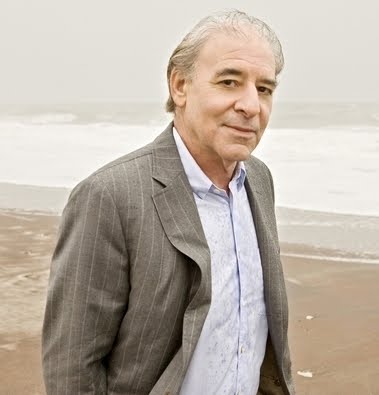
The Rhodies have discovered another author they are recommending for readers who enjoy a good thriller.  Like Scott TuroMw and John Grisham, Michael Fredrickson comes from a legal background.  He has worked both as a lawyer and as the general counsel to the state agency that polices lawyers.  But Michael Fredrickson has something that those other guys don't - he studied English literature, as a Rhodes scholar, at Oxford University.  He's also worked as a singing telegrapher, hippy farmer and college professor.  So he's got the literary chops to go with the legal background when it comes to his writing, as well as a rich background to pull from.

Of Fredrickson, the Rhodies say:
"writes a really interesting "suspense" (I guess) novel.  Incorporates the qualities of legal intricacies, police procedure, dialogue a la George V. Higgins, interesting twists and turns and a feel for Boston streets.  I've read three of his titles and wait eagerly for more.  His earliest is "A Cinderella Affidavit".  Well worth looking for."


Macmillan Books says that Fredrickson's "fascination with the ethical dilemmas lawyers face is evident in his crime novels."  I had gotten kind of burned out on crime thrillers, they all seemed kind of formulaic and the writing didn't impress me.  But I think I'm going to have to give Fredrickson a chance.

Does your family like to give each other recommendations?  Do you ever find any hidden gems?

Sunday, July 25, 2010

Mama Shepp's Family Recommends: Alan Furst

The Rhodies have, once again, come through with a recommendation that doesn't include just a single book but a whole catalog. So if you find you love the author, you will be at no loss for more titles to read!

"Mama Shepp take note, as well as other readers. We have from the first been adoring fans of Alan Furst who writes spy novels set in Eastern Europe in the period from WWI to WWII."


" We just finished his most recent ("Spies of the Balkans") and think it may be our favorite of the lot. Ten titles so far, and we hope he will be good for ten more. I can only think to compare him with Graham Greene in style and mood. His characters are inevitably interesting and his plots, while intricate, are easily followed.These are not who dunnits; not cozys, not loaded with silliness like the James Bond books or charming eccentrics like the John LeCarre novel. "


"People fall in love, betray, kill and die, survive the grim life of their times or fail to do so. He does a wonderful job of conveying the look and feel of places and historic Do begin with "Night Soldiers" because there is occasionally some carry-over of one or another character. However, each book will stand on its merits."


Patrick Anderson, book reviewer for the Washington Post, has this to say about Furst and his latest:
"I read my first Alan Furst novel nine years ago and urged Book World's readers to do themselves a favor and seek out everything this talented writer had in print. Now, having read Furst's 11th and latest novel, Spies of the Balkans, I find that my advice holds. About all that has changed since 2001 is that Furst was relatively unknown then, and today he is widely recognized as one of the finest spy novelists active."

Saturday, June 19, 2010

Mama Shepp's Family Recommends...

Ten years or so ago, the pilot light went out on my furnace. The only thing to do while I waited for help was to light the fireplace and spend some time in my robe and slippers in front of the computer. What's all that got to do with this book, you ask? Hold on...I'm getting to that. On a lark, I did a search on my paternal grandmother's name. It's something of an unusual name and I didn't really expect to find anything but, what the heck, there was nothing better to do. Lo and behold, I discovered the family of my great-grandfather's brother. Excited, I called my mom and told her. She took it and ran...and discovered an enormous family of cousins that we didn't even know existed. Including a cousin in Arizona and her husband, who shall hereafter be known as the Arizona cousins. Catchy, I know. I love to see her Facebook posts--he is a wonderful photographer so she posts great shots of nature in their area that is like nothing we have here. And, did I mention, they read.

Arizona cousin was raving about Kim Stanley Robinson's The Years of Rice and Salt on Facebook the other day so, of course, I had to check it out. Here's what she says about the book:


"The Years of Rice and Salt," an outstanding novel by Kim Stanley Robinson, examines the possible rise of civilization without Europeans (who all die of plague in the 14th century). Using the device of reincarnation to hold the story together, the story examines religion, philosophy, culture, history, and math and science. The characters are vital and charismic. The ending is dramatic. Take your time reading through this one. It's well worth it."

Kim Stanley Robinson is best known as an award-winning science-fiction writer of the Mars trilogy. Anyone who's been following this blog for long would, therefore, understand why I had never heard of him. Other than some Ray Bradbury years ago, I really don't touch the stuff. But this one really intrigues me. And if this is science fiction, then maybe I need to rethink my position on that genre!

Saturday, May 15, 2010

Mama Shepp's Family Recommends...


This week's recommendation once again comes from Rhode Island. The Rhoadies have both read and enjoyed Paul Adam's The Rainaldi Quartet and Paganini's Ghost - and recommend they be read in that order. Here's what they have to say:

"We just finished reading Paganini's Ghost by Paul Adam. His earlier "The Rainaldi Quartet" set the stage with a group of old friends in northern Italy who get together to play chamber music. The protagonist is a luthier, who makes his living repairing stringed instruments. His policeman buddy occasionally involves him in solving crimes. There is much music history; much of the pleasure of music and of the companionship of dear friends; some obligatory obeisance to Italian cuisine and a lot of the pleasure of a story well-told."

Booklist describes The Rainaldi Quartet this way:
In Cremona, Italy, a violin maker is murdered, stabbed through the neck with a chisel. When his devastated friends, including police detective Guastafeste, discover that the dead man was obsessed with finding an immensely valuable violin called the Messiah's Sister, built by the legendary Stradivarius, they decide to continue his quest. There are only two problems: the violin might not actually exist, and it looks like the murderer hasn't completed his grisly work.

And this to say about "Paganini's Ghost:"
A day after a heavily promoted violin recital in Cremona, Italy, at which prize-winning Russian prodigy Yevgeny Ivanov plays the priceless violin once owned by Paganini, a visiting French art dealer is found murdered in his hotel room. When a scrap of paper torn from a Paganini piece played by Ivanov seems key to opening an ornate gold box found in the victim’s possession, violin maker Gianni Castiglione (introduced in The Rainaldi Quartet, 2006) is called into the case by his friend, police detective Antonio Guastafeste. Castiglione cracks the code to find that the now-empty box once housed a small violin, setting him—with Guastafeste—on a cross-continental search, during which other murders are committed, and Castiglione must call on his knowledge of history, genealogy, and provenance to find long-missing treasures and solve the crimes.

As a lover of classical music and pretty much anything to do with Italy, I think I'm going to have to add these mysteries to my summer reading list.

Girolamo Rainaldi (1570 – July 15, 1655) was an Italian architect who worked on the whole in a conservative Mannerist style, often with collaborating architects, yet was a successful competitor of Bernini. His son, Carlo Rainaldi, became an even more notable, more fully Baroque architect.

Niccolò Paganini (27 October 1782 – 27 May 1840) was an Italian violinist, violist, guitarist, and composer. He was one of the most celebrated violin virtuosi of his time, and left his mark as one of the pillars of modern violin technique. His Caprice No. 24 in A minor, Op. 1, is among the best known of his compositions, and has served as an inspiration for many prominent composers.

Saturday, April 17, 2010

Mama Shepp's Family Recommends...

This week's family recommendation comes from Mama Shepp's own mama. Actually, I'm not sure anyone's ever called her "Mama" but that's neither here nor there. What's she's recommended for us is Extra Virgin: Amongst The Olive Groves of Liguria by Annie Hawkes. Here's what Mom has to say about the book:

"Annie Hawes and "the sister" leave England to work in San Pietro, a town on the Riviera near the French border, for ten weeks. They begin their stay in an inn which also houses "The Sulking Cafe" where they learn the wide differences between Italy and England. The English sisters are mystified over the many beliefs of the Italians in 1983 and the Italians are horrified over the behavior and notions of the English sisters. Before the ten weeks are over, the sisters have bought a rustico (an old abandoned home) in the mountains above the village. They begin the process of learning to live with "the hanky people" and to learn and accept the customs. There are many blunders made as they progress through the steps to making their house a home and to adapting the many terraces around their home into an acceptable landscape. The story includes many references to Italian foods and eating habits. The most common thread is that of the olive tree which grows in great abundance in their region. As you read, you learn to love the Italian friends and feel sorrow when one later dies. You struggle to learn to care for the olive trees and to make the tedious ride up to the mountain home. You are introduced to many Italian words and have a wonderful time at the many "festas" that frequently occur. Because it is only about 40 years since the end of WWII, you are introduced to the memories of the Nazi influence in this part of the world and feel grateful that you are not a German trying to settle in this region. When money runs out, the sisters return to England to work but hurry back to their new home. The book has many facets--humor, instruction, pathos, cooking lessons, horticulture, etc.--it is a delightful book, one that I highly recommend. The author's memoirs are well written and you live the years with and through her. Her command of the English language makes the book come alive. It just makes you go "wow!" Luigi and Maria and Domenico and Sergio became my friends as we harvested the olives and fought the forest fires, and stomped the grapes. And now if you don't mind, I need to go and find some extra virgin olive oil--the noon church bells are ringing and I must follow custom and eat."

When looking for more information on this book, I found a curious thing. I'm used to different covers, so I wasn't surprised that the cover I found on Goodreads (above) was not the same as the cover I found on Barnes & Nobles' website. The strange part was that the subtitle was different. So if this one appeals to you, you may find it under the title "Extra Virgin: A Young Woman Discovers The Italian Riviera, Where Every Month Is Enchanted." Oh, and do make sure you look for this by the author as well as the title, which, not surprisingly, will also bring you up some books of an entirely different ilk!

Saturday, April 3, 2010

Mama Shepp's Family Recommends...

Introducing "Mama Shepp's Family Recommends...," a new feature I'm planning to be posting every other week. With my reading down this year, and with a family of readers, I thought it was time to call in the troops. From teenagers to retirees and all manner of tastes in books, I'm hoping to be able to bring some books to your attention that are also new finds for me.

When I floated the idea of this to my family, my uncle was quick to reply so he's up first.

"A few days ago I touted to you a three volume work of historical fiction about the Haitian revolution by an author named Madison Smartt Bell. Yesterday I finished another book that demonstrates the versatility of this author. The title is "Anything Goes". This is about a blues band traveling from nasty dive to nasty dive from Key West to New Hampshire--the kind of music and venue that used to appeal most to me. Some of it will make sense only to a musician but even those of us not so called should appreciate the evolution of the narrator, a guitarist/bassist named Jesse, and the relationships among a succession of band members. The creative process seems as difficult as life on the road and perhaps only slightly more rewarding."

I like the cover of this one--it makes me think of the legend of bluesman Robert Johnson selling his soul to the devil at a crossroads in exchange for musical genius.

The publisher has this synopsis:
The only taste of life Jesse has known in his twenty years is bitter: his mother disappeared before he could talk, his father never got over being left, and Jesse's presence seems only to kindle his father's anger. Jesse's talent is for music, which has given him a livelihood and a home as a bass player in a bar band called Anything Goes. Band life offers the opportunity for the dregs of experience (hangovers, mildewed hotel rooms), and the antics of his band mates (all of them older than he is; some of them wiser, some not) offer more schooling in hard knocks." Anything Goes tells Jesse's story over the course of a year, during which he finds his life slowly being tempered by the unexpected: by a dad who wants to make up and be part of Jesse's life; by a female lead singer who suddenly makes the band sound a lot better than they have any right to be; and by the confidence Jesse begins to feel in his own musical talent.

When I pulled up the Barnes and Noble site to get a picture of the book, I was very surprised by the variety of books that Bell has written. In addition to historical fiction (including the trilogy about the Haitian revolution) and fiction, Bell has also written books about the writing process and published short story collections.

What's your family been reading this week?