Some Luck by Jane Smiley
Published October 2014 by Knopf Doubleday Publishing Group
Source: purchased this one for my Nook
Publisher's Summary:
On their farm in Denby, Iowa, Rosanna and Walter Langdon abide by time-honored values that they pass on to their five wildly different children: from Frank, the handsome, willful first born, and Joe, whose love of animals and the land sustains him, to Claire, who earns a special place in her father’s heart.
Each chapter in Some Luck covers a single year, beginning in 1920, as American soldiers like Walter return home from World War I, and going up through the early 1950s, with the country on the cusp of enormous social and economic change. As the Langdons branch out from Iowa to both coasts of America, the personal and the historical merge seamlessly: one moment electricity is just beginning to power the farm, and the next a son is volunteering to fight the Nazis; later still, a girl you’d seen growing up now has a little girl of her own, and you discover that your laughter and your admiration for all these lives are mixing with tears.
My Thoughts:
This word came up the other night when my book club was talking about this book, "minutiae." Well, that pretty much sums it up. Which isn't necessarily a bad thing. Just a warning.
This is mostly a very quiet book, full of the details that make up a life and reveal it in depth. Which is unusual to find in a book that spans thirty years. If you're a person that gives up on a book after 50 pages, there's the very real chance that this one isn't for you. It's all about connecting with the Langdon family and given that a good chunk of the first part of the book is told from the point of view of infants with not much happening, it's hard to get into.
In fact, if I hadn't been committed to reading it for book club, I'm not sure I would have stuck with it. In the end, I'm not sure how much I liked it. Smiley does do a wonderful job of taking her readers deeply into life on a Midwest farm in the first half of the last century. Seriously, I'm not sure what made women marry farmers then. Except that, of course, all of their family lived on farms nearby, as did both Rosanna's and Walter's families and that made for an interesting three-generation dynamic.
Two things that threw me: from the beginning, it seemed that the story was about the entire Langdon family and yet, very often, it felt like it was a book about Frank and the people around him. Which brought me to the second issue - when Frank went off to World War II, we went with him to Africa and then Italy where he served as a sniper. It seemed to me it would have been more in keeping with the rest of the book to have stayed with the family, to have seen how the war affected those left at home.
This is the first book of a planned trilogy. I'm not sure where Smiley will be going with the next book, if she'll be following Frank or one of his siblings or picking up with one of the other characters. I don't very much, though, that I'll read it even though I'd give this one a three star rating assuming I rated books here.
Showing posts with label historical fiction. Show all posts
Monday, August 24, 2015
Thursday, March 22, 2012
The Sun Also Rises by Ernest Hemingway
Originally published in 1926
Source: my husband's college copy
The Sun Also Rises is the story of Jake Barnes, Lady Brett Ashley, Robert Cohn and an assortment of other expatriates as they travel from their wild lives in Paris to the bullfights of Pamploma, Spain in the 1920's. Although the story is primarily about the interaction of these people, it is also an homage to Hemingway's passions.
The overview on the Barnes & Nobel calls The Sun Also Rises poignant, a word that I initially took issue with in reference to this book. My idea of the definition of "poignant" tended to be "profoundly moving, touching." I know this book is considered a masterpiece - any source you look at will tell you as much. But I definitely did not find it profoundly moving nor touching. Poignant, however, can also be defined as "neat, skillful and to the point," "piercing, incisive," and "keenly distressing to the mind." By any of those definitions, The Sun Also Rises is indeed poignant.
"Neat, skillful and to the point"
Hemingway may be the ultimate in "to the point" authors. When writing dialogue, he has almost entirely done away with the "he said, she cried, John extolled" pieces. The reader must pay attention in order to know who is saying what.
Whereas writers up to the time of the Lost Generation tended to be overly descriptive, Hemingway is very careful about when he uses description. I haven't much of a clue what any of the characters in this book look like, unless other characters have pointed out something about their features. Hemingway clearly preferred to let the reader form an image of his characters based almost entirely on their actions. He seemed to be of a different mind frame when it came to his passions - the streets of Paris, the countryside of Spain, fishing and bullfighting are all vividly portrayed (although certainly not in any way that might be considered flowery).
"Piercing, incisive"
While Hemingway may leave the reader to wonder about his characters appearance, he leaves the reader in no doubt whatsoever about their motivations, their biases, not their feelings, not even at his own expense.
I'm not sure if when Hemingway wrote The Sun Also Rises the things that I found to be keenly distressing to the mind were then felt to be keenly distressing to the mind. Black people are repeatedly referred to by the N word, gay men are referred to as "faggots" and there is no end to belittling Robert Cohn because of his begin Jewish. Was this par for the course at the time the book was written? Does this merely reflect Hemingway's feelings? Or did Hemingway include these things just be provocative? None of this even touches on the passages about the running of the bulls and the bullfighting scenes.
It's been thirty years since I read anything by Hemingway. The Old Man and The Sea really should not be taught to high school students - they don't have the life experience to understand it and it may just scare them off of Hemingway forever! Did I enjoy this one any more? Well, yes and no. Honestly, I found it to be dry and, frankly, boring at times. But there is so much to think about in the book. It made for a excellent book club choice because of the story and the way it changed the way authors write. As much as I love Charles Dickens, Jane Austen and the like, thank you, thank you to Ernest Hemingway and the authors of his generation for teaching writers that sometimes less really is more.
Originally published in 1926
Source: my husband's college copy
The Sun Also Rises is the story of Jake Barnes, Lady Brett Ashley, Robert Cohn and an assortment of other expatriates as they travel from their wild lives in Paris to the bullfights of Pamploma, Spain in the 1920's. Although the story is primarily about the interaction of these people, it is also an homage to Hemingway's passions.
The overview on the Barnes & Nobel calls The Sun Also Rises poignant, a word that I initially took issue with in reference to this book. My idea of the definition of "poignant" tended to be "profoundly moving, touching." I know this book is considered a masterpiece - any source you look at will tell you as much. But I definitely did not find it profoundly moving nor touching. Poignant, however, can also be defined as "neat, skillful and to the point," "piercing, incisive," and "keenly distressing to the mind." By any of those definitions, The Sun Also Rises is indeed poignant.
"Neat, skillful and to the point"
Hemingway may be the ultimate in "to the point" authors. When writing dialogue, he has almost entirely done away with the "he said, she cried, John extolled" pieces. The reader must pay attention in order to know who is saying what.
Whereas writers up to the time of the Lost Generation tended to be overly descriptive, Hemingway is very careful about when he uses description. I haven't much of a clue what any of the characters in this book look like, unless other characters have pointed out something about their features. Hemingway clearly preferred to let the reader form an image of his characters based almost entirely on their actions. He seemed to be of a different mind frame when it came to his passions - the streets of Paris, the countryside of Spain, fishing and bullfighting are all vividly portrayed (although certainly not in any way that might be considered flowery).
"Piercing, incisive"
While Hemingway may leave the reader to wonder about his characters appearance, he leaves the reader in no doubt whatsoever about their motivations, their biases, not their feelings, not even at his own expense.
"Keenly distressing to the mind""You're an expatriate. You've lost touch with the soil. You get precious. Fake European standards have ruined you. You drink yourself to death. You become obsessed by sex. You spend all your time talking, not working. You are an expatriate, see? You hang around cafes."
I'm not sure if when Hemingway wrote The Sun Also Rises the things that I found to be keenly distressing to the mind were then felt to be keenly distressing to the mind. Black people are repeatedly referred to by the N word, gay men are referred to as "faggots" and there is no end to belittling Robert Cohn because of his begin Jewish. Was this par for the course at the time the book was written? Does this merely reflect Hemingway's feelings? Or did Hemingway include these things just be provocative? None of this even touches on the passages about the running of the bulls and the bullfighting scenes.
It's been thirty years since I read anything by Hemingway. The Old Man and The Sea really should not be taught to high school students - they don't have the life experience to understand it and it may just scare them off of Hemingway forever! Did I enjoy this one any more? Well, yes and no. Honestly, I found it to be dry and, frankly, boring at times. But there is so much to think about in the book. It made for a excellent book club choice because of the story and the way it changed the way authors write. As much as I love Charles Dickens, Jane Austen and the like, thank you, thank you to Ernest Hemingway and the authors of his generation for teaching writers that sometimes less really is more.
Monday, March 12, 2012
The Mapping of Love and Death: A Maisie Dobbs Novel by Jacqueline Winspear
Published February 2011 by HarperCollins Publishing
Source: the copy courtesy of the publisher and TLC Book Tours
Well, this is embarrassing! As you may have noticed from the icon on my sidebar, March is Maisie Month and in honor of that bloggers on the tour for the latest Maisie Dobbs novel, Elegy for Eddie, aren't reading just that novel but one or more of the previous eight Maisie novels. I committed to two, the new one and the seventh, The Mapping of Love and Death. And then I promptly wrote down the wrong dates for the reviews of each book. So this weekend I was happily reading Elegy for Eddie in preparation for my review of it today. Oops - for some reason late yesterday I finally actually looked at the tour information and realized I had read the books out of order. I promptly switched books and I'm about half way through The Mapping of Love and Death this morning. I'll be finishing the book today and will have my full review up this evening.
**My Review**
In The Mapping of Love and Death, private investigator Maisie Dobbs has been hired to investigate a mystery involving an American cartographer killed during World War I. Wealthy son of British ex-patriot Edward Clifton, Michael Clifton has only just bought some land in California with the certainty that oil will be found there when Britain announces war with Germany. Feeling a duty to his father's homeland, Michael immediately leaves for England leaving behind the truth behind his land purchase.
Sixteen years after he went missing, his body has been discovered, along with some letters from a woman who his parents would like Maisie to find.But there is more to the story that even his mother isn't aware of; Michael's father is convinced that Michael was murdered. When Maisie's clients are brutally assaulted in their hotel room, Maisie's investigation takes on a much greater sense of urgency.
Jacqueline Winspear fills her Maisie Dobbs books with a wonderful supporting cast including her devoted father, her beloved mentor, her employee, Billy, and her best friend Priscilla. Clearly these characters have developed throughout the series but Winspear does a fine job of giving the reader enough information to get up to speed with the relationships but doesn't burden readers with background that could take away from the story line.
I'm sure these mysteries fall into the "cozy" mystery genre but I feel like there is more depth to the Maisie books that I typically find in so-called cozy mysteries. These characters carry a lot of very palpable pain. But Winspear doesn't let her stories get bogged down in that pain or the mystery, bringing plenty of humor to the books as well. I was also impressed with the way Winspear managed to keep the investigative portion of the book moving forward while retaining the real life stories of the characters. There is also much to be learned about the time period, and in this case cartography, without getting weighed down in her research.
I'm sorry to have started so late in the series. I'll definitely pick up the next book but I'm not sure I can go back to the beginning knowing so much already about what will happen to the characters. I will, however, be looking forward to the tenth book!
Published February 2011 by HarperCollins Publishing
Source: the copy courtesy of the publisher and TLC Book Tours
Well, this is embarrassing! As you may have noticed from the icon on my sidebar, March is Maisie Month and in honor of that bloggers on the tour for the latest Maisie Dobbs novel, Elegy for Eddie, aren't reading just that novel but one or more of the previous eight Maisie novels. I committed to two, the new one and the seventh, The Mapping of Love and Death. And then I promptly wrote down the wrong dates for the reviews of each book. So this weekend I was happily reading Elegy for Eddie in preparation for my review of it today. Oops - for some reason late yesterday I finally actually looked at the tour information and realized I had read the books out of order. I promptly switched books and I'm about half way through The Mapping of Love and Death this morning. I'll be finishing the book today and will have my full review up this evening.
**My Review**
In The Mapping of Love and Death, private investigator Maisie Dobbs has been hired to investigate a mystery involving an American cartographer killed during World War I. Wealthy son of British ex-patriot Edward Clifton, Michael Clifton has only just bought some land in California with the certainty that oil will be found there when Britain announces war with Germany. Feeling a duty to his father's homeland, Michael immediately leaves for England leaving behind the truth behind his land purchase.
Sixteen years after he went missing, his body has been discovered, along with some letters from a woman who his parents would like Maisie to find.But there is more to the story that even his mother isn't aware of; Michael's father is convinced that Michael was murdered. When Maisie's clients are brutally assaulted in their hotel room, Maisie's investigation takes on a much greater sense of urgency.
Jacqueline Winspear fills her Maisie Dobbs books with a wonderful supporting cast including her devoted father, her beloved mentor, her employee, Billy, and her best friend Priscilla. Clearly these characters have developed throughout the series but Winspear does a fine job of giving the reader enough information to get up to speed with the relationships but doesn't burden readers with background that could take away from the story line.
I'm sure these mysteries fall into the "cozy" mystery genre but I feel like there is more depth to the Maisie books that I typically find in so-called cozy mysteries. These characters carry a lot of very palpable pain. But Winspear doesn't let her stories get bogged down in that pain or the mystery, bringing plenty of humor to the books as well. I was also impressed with the way Winspear managed to keep the investigative portion of the book moving forward while retaining the real life stories of the characters. There is also much to be learned about the time period, and in this case cartography, without getting weighed down in her research.
I'm sorry to have started so late in the series. I'll definitely pick up the next book but I'm not sure I can go back to the beginning knowing so much already about what will happen to the characters. I will, however, be looking forward to the tenth book!
Wednesday, February 8, 2012
Across The Endless River by Thad Carhart
320 pages
Published September 2009 by Knopf Doubleday
Source: the publisher
Across The Endless River is the story of Jean-Baptiste Charbonneau, the son of Sacagewea and a French fur trader. Baptiste (as he preferred to be called) went with the Lewis and Clark expedition to the Pacific Ocean as an infant and grew up in two cultures. Through much of his life, Baptiste split time between the Mandan tribe his mother was a part of and St. Louis, where he got a traditional education and was cared for by his godfather, Captain Clark. Even as a young man, he became well known for his skill with languages (in addition to English and French, Baptiste was skilled in several Native American languages as well), knowledge of the western lands and people, and his ability to live in the wild. Because of these skills, Baptiste was introduced to Duke Paul of Wurttemburg (Germany) and asked to help the Duke collect Native American artifacts and native plants and animals. Impressed with the young man, the Duke asked Baptiste to accompany him back to Europe to help catalogue his acquisitions, prepare them for exhibition and write a book.
Baptiste spent the next five years in Europe, spending time in France and Germany, meeting people from all walks of life, working with the duke and his peers, attending balls, and falling in love. While he enjoyed the benefits of living with nobility and finding himself accepted by them, it was always clear to Baptiste that he was not one of them. Neither was he one of the servant class, a fact also made clear to him.
Across The Endless River is one of the first books I was offered for review when I began blogging. I accepted it because much of the early story was set in my part of the country and because I enjoy historical fiction. For some reason, once it arrived, though, it never seemed to call to me. In the past few months I've been accepting far fewer books for review in an effort to clear up my previous commitments and this one finally made its way into my hands.
There were parts of this book that very much impressed me. Carhart does a wonderful job of taking historical fact and mixing it with historical fiction and has a way with description that really made me see the places, people and things he was writing about. Ultimately, though, the book feel flat for me. Much of the first part of the book felt like a buildup to the second part but once Baptiste and the Duke arrived in Europe, it felt like very little was actually happening. The pair would flit from place to place and periodically Carhart would stop and spend a great deal of time writing about a particular scene but often these scenes didn't seem to contribute to building the story for me. Carhart touched on some topics I would have liked to see him spend more time with and I couldn't help but wonder if a different editor might have been able to keep the book on a track that would have worked better for me.
Monday, January 9, 2012
The March by E. L. Doctorow
384 pages
Published September 2005 by Random House Publishing Group
Source: purchased
In 1864, General William Tecumseh Sherman and his sixty thousand troops have just marched into Georgia and burned Atlanta. Now they are making their way to the coast and then up into the Carolinas as Sherman attempts to finish off the Confederacy.
Along the way, the troops will pick up thousands of freed slaves and refugees and the march will become something much more than just a military maneuver, it will become a study in humanity...and inhumanity.
Emily Thompson's father succumbs to death just as Sherman's troops storm through her town. When she goes in search of the doctor, she finds, instead, Wrede Sartorius, Union surgeon. Emily is so taken by Sartorius' gentlemanly ways and handling of the surgery that she makes the decisions, as the troops pull out, to follow along and help with the wounded and dying.
Pearl, a freed slave and daughter of her master, is nearly white and captures the hearts of one Union soldier after another. In this way, she is not only kept safe but finds herself also at work in Wrede Sartorius's unit. Her sole goal is to deliver a letter to the family of the soldier who first saved her.
Wrede Sartorius, the doctor who at first appeared to be so kindhearted, is first and foremost, a physician interested in advancing science even when it means that one man will ride with the troops for days with a spike sticking from his head so that the doctor could observe the decline of the patient for himself.
Arly and Will are Southern soldiers who find themselves in prison together early on, only to be liberated when they promise to fight to save a city. But Arly is always looking for the way to save his own skin and the two almost immediately desert, finding themselves on the Union side of the line.
Doctorow has a way of telling a sweeping saga at an intimate level that is almost unparalleled in storytelling. In The March is also able to make the reader see both the good and the bad in the actions of both sides of the conflict. More than once, I found myself hoping that the Union soldiers would "get theirs." As I did with Doctorow's Ragtime, I learned a lot from this book because Doctorow is also incomparable at mixing historical figures and actions in his fiction.
My one complaint with this book was that I spent most of it expecting the same kind of drawing together of storylines that I had so enjoyed in Ragtime which did not happen. Instead, some of the stories wrapped up early, some of them just ended; only a couple wound their way through the entire book. Which is probably more realistic, just not what I was expecting. So many people have cited this book as one of their all-time favorites and my expectations were high. While this, the last book I read in 2011, was one of my favorite books of the year, it still did not come close to captivating me in the way that Ragtime did.
384 pages
Published September 2005 by Random House Publishing Group
Source: purchased
In 1864, General William Tecumseh Sherman and his sixty thousand troops have just marched into Georgia and burned Atlanta. Now they are making their way to the coast and then up into the Carolinas as Sherman attempts to finish off the Confederacy.
Along the way, the troops will pick up thousands of freed slaves and refugees and the march will become something much more than just a military maneuver, it will become a study in humanity...and inhumanity.
Emily Thompson's father succumbs to death just as Sherman's troops storm through her town. When she goes in search of the doctor, she finds, instead, Wrede Sartorius, Union surgeon. Emily is so taken by Sartorius' gentlemanly ways and handling of the surgery that she makes the decisions, as the troops pull out, to follow along and help with the wounded and dying.
Pearl, a freed slave and daughter of her master, is nearly white and captures the hearts of one Union soldier after another. In this way, she is not only kept safe but finds herself also at work in Wrede Sartorius's unit. Her sole goal is to deliver a letter to the family of the soldier who first saved her.
Wrede Sartorius, the doctor who at first appeared to be so kindhearted, is first and foremost, a physician interested in advancing science even when it means that one man will ride with the troops for days with a spike sticking from his head so that the doctor could observe the decline of the patient for himself.
Arly and Will are Southern soldiers who find themselves in prison together early on, only to be liberated when they promise to fight to save a city. But Arly is always looking for the way to save his own skin and the two almost immediately desert, finding themselves on the Union side of the line.
Doctorow has a way of telling a sweeping saga at an intimate level that is almost unparalleled in storytelling. In The March is also able to make the reader see both the good and the bad in the actions of both sides of the conflict. More than once, I found myself hoping that the Union soldiers would "get theirs." As I did with Doctorow's Ragtime, I learned a lot from this book because Doctorow is also incomparable at mixing historical figures and actions in his fiction.
My one complaint with this book was that I spent most of it expecting the same kind of drawing together of storylines that I had so enjoyed in Ragtime which did not happen. Instead, some of the stories wrapped up early, some of them just ended; only a couple wound their way through the entire book. Which is probably more realistic, just not what I was expecting. So many people have cited this book as one of their all-time favorites and my expectations were high. While this, the last book I read in 2011, was one of my favorite books of the year, it still did not come close to captivating me in the way that Ragtime did.
Thursday, December 29, 2011
A Separate Country
A Separate Country by Robert Hicks
432 pages
Published September 2009 by Grand Central Publishing
Source: I won it in a drawing
Eli Griffin has been left a task by a dying man, a man he had tried to kill years earlier. Major General John Bell Hood, late of the Confederate army, knows that he can make Griffin feel obliged to discharge an obligation to make up for that attempt and in his dying hours sets Griffin to a task that will bring him into contact with characters that could not populate any city except New Orleans.
John Hood left the war with an arm he could not use and a leg that had been amputated yet the wounds that most profoundly marked him were the wounds that couldn't be seen. Hood was bitter and conflicted about what he had done in his years in the army and deeply disappointed with the legacy that he had left. He spent much of the rest of his life writing a book attempting to set the record straight. On his death bed, however, he tells Griffin that he wants that book destroyed and a more recent accounting of his life published. This is the story of his life with Anna Marie Hennen, a New Orleans beauty who was inexplicably drawn to the shattered man, who gave birth to his eleven children and who introduced him to people who could only have lived in New Orleans.
Griffin is left to deal with these people as he attempts to retrieve the original book from from Confederate General Beauregarde and to find a killer who Hood says must approve the publication of the second book. Along the way Griffin is drawn more deeply into the world that Hood has inhabited since he first met Anna Marie, a world that includes the dwarf, Rintrah, a priest without a church, Father Mike, and the memory of a beloved man whose legacy seems to contradict what Griffin learns about him.
Hicks moves the story of Griffin's task back and forth between the writings that both Hood and Anna Marie have left and Griffin's own search for the truth in a way that keeps the story moving along and never seems to become confusing (as can so often happen when authors choose this method of story telling). The story moves back and forth in time, slowly revealing new surprises along the way. Hicks does a marvelous job of creating multi-layered characters - in even the most hardened characters there is a soft place reserved for loved ones and old hurts. The city of New Orleans comes alive in Hicks' hands as does the time period immediately following the American Civil War.
Unfortunately, the book fell flat for me in the end. The story became too complex and implausible for me and a character that was introduced late in the story and seemed to be somewhat pivotal was never fully explained to my satisfaction. Still I enjoyed the book overall and I would recommend it for lovers of historical fiction, particularly those who enjoy stories revolving around the American Civil War.
I read this book for the War Through The Generations Challenge.
432 pages
Published September 2009 by Grand Central Publishing
Source: I won it in a drawing
Eli Griffin has been left a task by a dying man, a man he had tried to kill years earlier. Major General John Bell Hood, late of the Confederate army, knows that he can make Griffin feel obliged to discharge an obligation to make up for that attempt and in his dying hours sets Griffin to a task that will bring him into contact with characters that could not populate any city except New Orleans.
John Hood left the war with an arm he could not use and a leg that had been amputated yet the wounds that most profoundly marked him were the wounds that couldn't be seen. Hood was bitter and conflicted about what he had done in his years in the army and deeply disappointed with the legacy that he had left. He spent much of the rest of his life writing a book attempting to set the record straight. On his death bed, however, he tells Griffin that he wants that book destroyed and a more recent accounting of his life published. This is the story of his life with Anna Marie Hennen, a New Orleans beauty who was inexplicably drawn to the shattered man, who gave birth to his eleven children and who introduced him to people who could only have lived in New Orleans.
Griffin is left to deal with these people as he attempts to retrieve the original book from from Confederate General Beauregarde and to find a killer who Hood says must approve the publication of the second book. Along the way Griffin is drawn more deeply into the world that Hood has inhabited since he first met Anna Marie, a world that includes the dwarf, Rintrah, a priest without a church, Father Mike, and the memory of a beloved man whose legacy seems to contradict what Griffin learns about him.
Hicks moves the story of Griffin's task back and forth between the writings that both Hood and Anna Marie have left and Griffin's own search for the truth in a way that keeps the story moving along and never seems to become confusing (as can so often happen when authors choose this method of story telling). The story moves back and forth in time, slowly revealing new surprises along the way. Hicks does a marvelous job of creating multi-layered characters - in even the most hardened characters there is a soft place reserved for loved ones and old hurts. The city of New Orleans comes alive in Hicks' hands as does the time period immediately following the American Civil War.
Unfortunately, the book fell flat for me in the end. The story became too complex and implausible for me and a character that was introduced late in the story and seemed to be somewhat pivotal was never fully explained to my satisfaction. Still I enjoyed the book overall and I would recommend it for lovers of historical fiction, particularly those who enjoy stories revolving around the American Civil War.
I read this book for the War Through The Generations Challenge.
Tuesday, November 8, 2011
Camp Nine by Vivienne Schiffer
198 pages
Published The University of Arkansas Press October 2011
Source: TLC Book Tours and the publisher
Twelve-year-old Chess Morton lives in Rook, Arkansas, a speck of a town in the Black Bayou, with her widowed mother. Despite living deep in the south in the early 1940's, Chess lives her life largely oblivious to the world around her. Until her grandfather sells a piece of land that Chess inherited from her father to the U.S. Government. Following the bombing of Pearl Harbor, the government relocated thousands of Japanese Americans to camp throughout the U.S. Camp Nine, one of these camps, sprang from the land that had been Chess' and would serve to change her life.
Chess' mother offers to teach art lessons to the prisoners of Camp Nine, befriending many of the families, particularly the Matsuis. Although reluctant to have anything to do with the camp at first, Chess is soon fast friends with both of the Matsui boys. Her relationship with each of them will enrich and enlighten her but it will be many years later before David Matsui finally teaches Chess exactly what it was that she was protected from as she was growing up in the bayou.
This is one of those books that made me glad that I've always been willing to take a chance with books I've never heard of; thanks to TLC Book Tours for always bringing them to my attention. Schiffer's debut is lovely and charming in a way that is utterly unexpected given the very tough subjects that it tackles. She immerses her reader deep into the Mississippi delta and an area of open racism and brings to life the divide between black and white, rich and poor. Chess brings to mind an older Scout Finch as she comes to terms with the reality of the relationships between herself and those around her. Just as Scout came to view her father as a complete person, Chess comes to see her mother as someone more than just a mother.
Readers will undoubtedly recall Jamie Ford's The Hotel On The Corner of Bitter and Sweet when reading Camp Nine, as both deal with the Japanese interment camps. But where Hotel dealt strictly with the situation from the Japanese point of view, Camp Nine details how the impact the camps may have had on the areas surrounding them as well as bringing to light life in these "camps."
Camp Nine would make a wonderful book club selection with much to discuss and a book to enjoy. For more opinions on this book, check out the full tour at TLC Book Tours.
198 pages
Published The University of Arkansas Press October 2011
Source: TLC Book Tours and the publisher
Twelve-year-old Chess Morton lives in Rook, Arkansas, a speck of a town in the Black Bayou, with her widowed mother. Despite living deep in the south in the early 1940's, Chess lives her life largely oblivious to the world around her. Until her grandfather sells a piece of land that Chess inherited from her father to the U.S. Government. Following the bombing of Pearl Harbor, the government relocated thousands of Japanese Americans to camp throughout the U.S. Camp Nine, one of these camps, sprang from the land that had been Chess' and would serve to change her life.
Chess' mother offers to teach art lessons to the prisoners of Camp Nine, befriending many of the families, particularly the Matsuis. Although reluctant to have anything to do with the camp at first, Chess is soon fast friends with both of the Matsui boys. Her relationship with each of them will enrich and enlighten her but it will be many years later before David Matsui finally teaches Chess exactly what it was that she was protected from as she was growing up in the bayou.
This is one of those books that made me glad that I've always been willing to take a chance with books I've never heard of; thanks to TLC Book Tours for always bringing them to my attention. Schiffer's debut is lovely and charming in a way that is utterly unexpected given the very tough subjects that it tackles. She immerses her reader deep into the Mississippi delta and an area of open racism and brings to life the divide between black and white, rich and poor. Chess brings to mind an older Scout Finch as she comes to terms with the reality of the relationships between herself and those around her. Just as Scout came to view her father as a complete person, Chess comes to see her mother as someone more than just a mother.
"She never voiced her frustration about it to me, but I realize she could have picked up and left with me then, gone to another state, and fought him [Chess' grandfather]. But she understood that my place was on the plantation, whatever it might mean to her personal freedom. I wish I'd understood then all of the choices she made to preserve my interests over her own."
Readers will undoubtedly recall Jamie Ford's The Hotel On The Corner of Bitter and Sweet when reading Camp Nine, as both deal with the Japanese interment camps. But where Hotel dealt strictly with the situation from the Japanese point of view, Camp Nine details how the impact the camps may have had on the areas surrounding them as well as bringing to light life in these "camps."
Camp Nine would make a wonderful book club selection with much to discuss and a book to enjoy. For more opinions on this book, check out the full tour at TLC Book Tours.
![]() |
| Vivienne Schiffer |
Tuesday, October 11, 2011
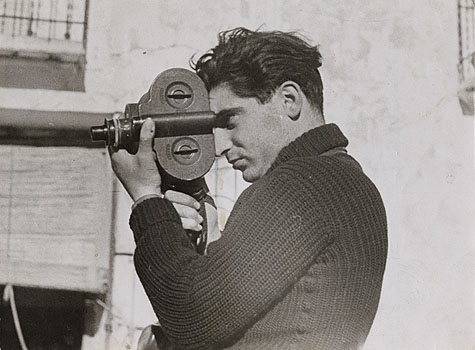
Waiting for Robert Capa by Susana Fortes
Waiting For Robert Capa by Susana Fortes
208 pages
Published September 2011 by HarperCollins Publishers
Source: the publisher and TLC Book Tours
Gerta Pohorylle and André Friedmann and are young Jewish refugees who arrive in Paris in 1935. Caught up in the scene that is Paris on the cusp of World War II, the two were first friends, then business partners and finally lovers. Friedmann taught Pohorylle the art of photography and she, in turn, remade him into Robert Capa, launching his career, and remade herself into Gerda Taro. She became one of the first female combat photographers and he became internationally known for his photograph, The Fallen Soldier. taken early during the Spanish Civil War.
Capa and Taro found themselves caught up in political movements in Paris as much because of what they stood against as because of what they stood for - they were both fiercely opposed to Facism. When the Spanish Civil War broke out, it was only logical that the pair would find themselves drawn to the country, throwing themselves as close to danger as was possible.
In her author notes, Fortes who is Spanish, stated that she's been drawn to the work of Capa for years. It was in 2008, when 127 undeveloped rolls of film that Capa, Taro, and their friend David Seymour had taken during the war, that Fortes decided it was time to write the story. Interestingly, I found the book to be much more Gerda's story.
Waiting For Robert Capa struggles to find it's voice. Sometimes, it's almost overly poetic as Fortes writes about the environment of Paris. Other times it reads much more as if it were a work of non-fiction, detailing movements in battles and dropping names of other well-known participants in the Paris and/or Spanish settings. For me, I far preferred when Fortes cut back on the descriptiveness and got to the meat of the story. It's a story I've been interested in for a couple of years and it felt as if Fortes and written fully-developed characters who may very well be much like the people on which they are based. I find myself even more interested in this pair whose relationship seems as if it truly were one with origins in the pages of a novel.
Thanks to TLC Book Tours for giving me the opportunity to read this one. For more opinions, please see the full list of reviews.
208 pages
Published September 2011 by HarperCollins Publishers
Source: the publisher and TLC Book Tours
Gerta Pohorylle and André Friedmann and are young Jewish refugees who arrive in Paris in 1935. Caught up in the scene that is Paris on the cusp of World War II, the two were first friends, then business partners and finally lovers. Friedmann taught Pohorylle the art of photography and she, in turn, remade him into Robert Capa, launching his career, and remade herself into Gerda Taro. She became one of the first female combat photographers and he became internationally known for his photograph, The Fallen Soldier. taken early during the Spanish Civil War.
Capa and Taro found themselves caught up in political movements in Paris as much because of what they stood against as because of what they stood for - they were both fiercely opposed to Facism. When the Spanish Civil War broke out, it was only logical that the pair would find themselves drawn to the country, throwing themselves as close to danger as was possible.
In her author notes, Fortes who is Spanish, stated that she's been drawn to the work of Capa for years. It was in 2008, when 127 undeveloped rolls of film that Capa, Taro, and their friend David Seymour had taken during the war, that Fortes decided it was time to write the story. Interestingly, I found the book to be much more Gerda's story.
Waiting For Robert Capa struggles to find it's voice. Sometimes, it's almost overly poetic as Fortes writes about the environment of Paris. Other times it reads much more as if it were a work of non-fiction, detailing movements in battles and dropping names of other well-known participants in the Paris and/or Spanish settings. For me, I far preferred when Fortes cut back on the descriptiveness and got to the meat of the story. It's a story I've been interested in for a couple of years and it felt as if Fortes and written fully-developed characters who may very well be much like the people on which they are based. I find myself even more interested in this pair whose relationship seems as if it truly were one with origins in the pages of a novel.
Thanks to TLC Book Tours for giving me the opportunity to read this one. For more opinions, please see the full list of reviews.
Monday, August 1, 2011
The Autobiography of Mrs. Tom Thumb by Melanie Benjamin
448 pages
Published July 2011 by Random House Publishing
Source: the publisher
Mercy Lavinia Warren Bump was born on Halloween in 1841 to a farm family in Massachusetts, a perfectly ordinary baby just as her three siblings had been. For a year, she grew normally. Then, almost without being noticed by her busy parents, she simply stopped growing. Lavinia, or Vinnie as she was known by family and friends, reached her peak height of 32 inches not long afterward. Her family was never quite sure what to make of her. She was sometimes an embarrassment to her siblings and always a concern to her mother who found danger lurking everywhere for her tiny daughter.
Vinnie, unlike her even smaller younger sister, Minnie, was much less concerned with what she should be afraid of as she was with what she wanted to be able to do. When the local school board offered her a teaching position when she was only sixteen, she jumped at the chance to be able to become somewhat independent of her family. When, less than a year later, Colonel John Wood walked into the family home offering Vinnie an even bigger opportunity. Claiming to be a distant cousin, Wood convinced the family that he could offer Vinnie the chance to travel the country, performing with his troupe, a troupe he claimed was akin to the world-famous acts shown by P.T. Barnum. Over her family's objections, Vinnie jumped at the chance.
Once on Wood's boat, Vinnie quickly discovered that life was not going to be quite what Wood had portrayed. Life on board was sometimes dangerous and never more dangerous than being around Wood soon became for Vinnie. But she had made many friends on the boat, particularly the giantess, Sylvia, who watched over her as if Vinnie were her sole responsibility.
When the Civil War broke out, the troupe found themselves without jobs and Vinnie was forced to return home. As much as she had missed her family and the comforts of home, Vinnie found herself missing the excitement of life away from home. Two years after she returned, she used the fame that she had found on the tour to attract the attention of P.T. Barnum himself.
Barnum was enchanted by Vinnie, less for the fact that she was a perfectly formed miniature woman, as he was by the fact of her intelligence and quick wit, and went about making her the sensation of the world, to much success. In 1863, despite not being in love with him, Vinnie married General Tom Thumb (Charles Stratton) in the wedding of the century. It was both Barnum and Vinnie's greatest triumph. She became even more famous and traveled the world, meeting royalty and presidents. But her fame came with a price. She would never find true love and she would no longer be able to protect Minnie from the glare of the public spotlight.
I've been anxiously waiting for The Autobiography of Mrs. Tom Thumb since I heard Melonie Benjamin talk about it at the Omaha Lit Fest last fall so I jumped at the chance to read and review it. I'm thrilled to be able to report that this book did not disappoint. Benjamin once again takes a well known but little written about woman from history and crafts a novel about what might have been, perfectly capturing the time period in which the story is set. In Vinnie she has also captured a voice which is filled with longing, spunk, and love and fully developed her into a person who is much more than just a public figure. I was thoroughly charmed by Benjamin's story; she has managed to give the reader a full range of emotions, to show the reader both the seedy underbelly of life in the mid-19th century and the over-the-top lifestyle of the well-to-do, and give us a love story on so many levels.
448 pages
Published July 2011 by Random House Publishing
Source: the publisher
Mercy Lavinia Warren Bump was born on Halloween in 1841 to a farm family in Massachusetts, a perfectly ordinary baby just as her three siblings had been. For a year, she grew normally. Then, almost without being noticed by her busy parents, she simply stopped growing. Lavinia, or Vinnie as she was known by family and friends, reached her peak height of 32 inches not long afterward. Her family was never quite sure what to make of her. She was sometimes an embarrassment to her siblings and always a concern to her mother who found danger lurking everywhere for her tiny daughter.
Vinnie, unlike her even smaller younger sister, Minnie, was much less concerned with what she should be afraid of as she was with what she wanted to be able to do. When the local school board offered her a teaching position when she was only sixteen, she jumped at the chance to be able to become somewhat independent of her family. When, less than a year later, Colonel John Wood walked into the family home offering Vinnie an even bigger opportunity. Claiming to be a distant cousin, Wood convinced the family that he could offer Vinnie the chance to travel the country, performing with his troupe, a troupe he claimed was akin to the world-famous acts shown by P.T. Barnum. Over her family's objections, Vinnie jumped at the chance.
Once on Wood's boat, Vinnie quickly discovered that life was not going to be quite what Wood had portrayed. Life on board was sometimes dangerous and never more dangerous than being around Wood soon became for Vinnie. But she had made many friends on the boat, particularly the giantess, Sylvia, who watched over her as if Vinnie were her sole responsibility.
When the Civil War broke out, the troupe found themselves without jobs and Vinnie was forced to return home. As much as she had missed her family and the comforts of home, Vinnie found herself missing the excitement of life away from home. Two years after she returned, she used the fame that she had found on the tour to attract the attention of P.T. Barnum himself.
Barnum was enchanted by Vinnie, less for the fact that she was a perfectly formed miniature woman, as he was by the fact of her intelligence and quick wit, and went about making her the sensation of the world, to much success. In 1863, despite not being in love with him, Vinnie married General Tom Thumb (Charles Stratton) in the wedding of the century. It was both Barnum and Vinnie's greatest triumph. She became even more famous and traveled the world, meeting royalty and presidents. But her fame came with a price. She would never find true love and she would no longer be able to protect Minnie from the glare of the public spotlight.
I've been anxiously waiting for The Autobiography of Mrs. Tom Thumb since I heard Melonie Benjamin talk about it at the Omaha Lit Fest last fall so I jumped at the chance to read and review it. I'm thrilled to be able to report that this book did not disappoint. Benjamin once again takes a well known but little written about woman from history and crafts a novel about what might have been, perfectly capturing the time period in which the story is set. In Vinnie she has also captured a voice which is filled with longing, spunk, and love and fully developed her into a person who is much more than just a public figure. I was thoroughly charmed by Benjamin's story; she has managed to give the reader a full range of emotions, to show the reader both the seedy underbelly of life in the mid-19th century and the over-the-top lifestyle of the well-to-do, and give us a love story on so many levels.
Tuesday, July 26, 2011
Tobacco Wars by Paul Seesequasis
113 pages
Published October 2010 by Quattro Books
Source: the publisher and TLC Book Tours
In Tobacco Wars, Paul Seesequasis gives the reader a modern retelling of the Native American story of creation (here a Bear Woman is responsible for all creation) and a work of historical fiction featuring Pocahontas and the British playwright Ben Jonson. Sound like an unusual story? You haven't heard the half of it.
When I say "modern retelling," I'm talking about a retelling that pushes the boundaries so far that Seesequasis feels the need to suggest in his acknowledgments that he may have "gone to places that they [his family elders] would not consider proper." The rivers and oceans are created when Bear Woman urinates; the sun is a ball of her phlegm; islands are mounds of her feces. The creation of the animals? Let's just say that occurs as the result of something your parents didn't tell you about until they thought you were old enough to hear it. And Seesequasis is quite vivid in his descriptions. After the first few pages of the book, I told my husband I felt like I was reading bear porn. Which, perhaps, brings me to the point. Much of this happens in the first few pages. I'm left wondering if Seesequasis' intention was to immediately shock his readers. To appear so avante garde that if, in the end, you feel like you just didn't get his point, he can justify it by suggesting that you had tuned out early.
The Pocohantas parts of the story are, by and large, much less graphic. Seesequasis, as a Native American, gives a unique feel to one of the most famous Native American's journey from "the Americas" to the court of England and back again. I certainly got what felt like a very real impression of what life must have been like on the streets of England at that time, gritty and dirty. My problem with these parts of the book was not so much what Seesequasis included but, rather, what he left out. In the end, I felt like there should have been more to the story; so few pages encompassing so many years and events.
I made the mistake of reading a few reviews of this before I even started the book, something I very rarely do and I will admit to being somewhat prejudiced going into the book. In the end I feel like I did read the book with an open mind (once I got past the bear porn) and believe I understand the point Seesequasis was trying to make. I did appreciate the idea of a "mother" of creation watching as the beautiful world she has created become overgrown with people who have no appreciation for its wonders. By and large, I enjoyed the story of Pocahantas and came away with the impression that Seesequasis certainly has talent. Sadly, I can't say that the book worked for me as a whole. The graphic descriptions did little more than turn me off to the book and I'm not sure that the two stories ever came together enough to feel like anything more than two entirely different stories.
Thanks to TLC Book Tours for giving me the opportunity, once again, to push my own boundaries with this one! For other opinions about this book, check out the full tour.
Paul Seesequasis is a writer and a journalist. He was the founding editor of the award-winning Aboriginal Voices magazine, and the recipient of a MacLean-Hunter journalist award. His short stories and feature writings have been published in Canada and abroad. Tobacco Wars is his first novella.
113 pages
Published October 2010 by Quattro Books
Source: the publisher and TLC Book Tours
In Tobacco Wars, Paul Seesequasis gives the reader a modern retelling of the Native American story of creation (here a Bear Woman is responsible for all creation) and a work of historical fiction featuring Pocahontas and the British playwright Ben Jonson. Sound like an unusual story? You haven't heard the half of it.
When I say "modern retelling," I'm talking about a retelling that pushes the boundaries so far that Seesequasis feels the need to suggest in his acknowledgments that he may have "gone to places that they [his family elders] would not consider proper." The rivers and oceans are created when Bear Woman urinates; the sun is a ball of her phlegm; islands are mounds of her feces. The creation of the animals? Let's just say that occurs as the result of something your parents didn't tell you about until they thought you were old enough to hear it. And Seesequasis is quite vivid in his descriptions. After the first few pages of the book, I told my husband I felt like I was reading bear porn. Which, perhaps, brings me to the point. Much of this happens in the first few pages. I'm left wondering if Seesequasis' intention was to immediately shock his readers. To appear so avante garde that if, in the end, you feel like you just didn't get his point, he can justify it by suggesting that you had tuned out early.
The Pocohantas parts of the story are, by and large, much less graphic. Seesequasis, as a Native American, gives a unique feel to one of the most famous Native American's journey from "the Americas" to the court of England and back again. I certainly got what felt like a very real impression of what life must have been like on the streets of England at that time, gritty and dirty. My problem with these parts of the book was not so much what Seesequasis included but, rather, what he left out. In the end, I felt like there should have been more to the story; so few pages encompassing so many years and events.
I made the mistake of reading a few reviews of this before I even started the book, something I very rarely do and I will admit to being somewhat prejudiced going into the book. In the end I feel like I did read the book with an open mind (once I got past the bear porn) and believe I understand the point Seesequasis was trying to make. I did appreciate the idea of a "mother" of creation watching as the beautiful world she has created become overgrown with people who have no appreciation for its wonders. By and large, I enjoyed the story of Pocahantas and came away with the impression that Seesequasis certainly has talent. Sadly, I can't say that the book worked for me as a whole. The graphic descriptions did little more than turn me off to the book and I'm not sure that the two stories ever came together enough to feel like anything more than two entirely different stories.
Thanks to TLC Book Tours for giving me the opportunity, once again, to push my own boundaries with this one! For other opinions about this book, check out the full tour.
Paul Seesequasis is a writer and a journalist. He was the founding editor of the award-winning Aboriginal Voices magazine, and the recipient of a MacLean-Hunter journalist award. His short stories and feature writings have been published in Canada and abroad. Tobacco Wars is his first novella.
Tuesday, July 5, 2011
The Book Thief by Markus Zusak
576 pages
Published September 2007 by Random House Children's Books
Source: Bought this one
Young Liesel Meminger is on her way to live with a foster family, her communist mother no longer able to care for her in Adolph Hitler's Germany, when her brother dies. When he is buried, one of the gravediggers drops his handbook in the snow. It will be the first book that Liesel steals, even though she is unable to read. It will also be Death's first encounter with Liesel.
Arriving at Hans and Rosa Huberman's small home, Liesel is at first terrified by Rosa (who has a "face decorated with constant fury"), but is soon won over by kind-hearted, accordion-playing Hans. Every night Liesel is awakened by nightmares of her brother's death and every night Hans sits up with her until she falls back to sleep, first reading to Liesel and then teaching her to read.
Life settles into a routine on the street, despite the war and the constant tension caused by the Nazi party. Liesel and her best friend, Rudy, struggle to make their way as they grow into their teens, joining a group of food thieves, dealing with the Hitler youth, and stealing books for Liesel.
Then one night a young Jewish man arrives at the house seeking safe shelter. Max is the son of a man Hans credits with saving his life in World War I; Hans has long ago told the boy's mother that if there is ever anything he can do, he will. And now it's time to pay back his debt and despite the great risk, the Huberman's make good, although it means that Max will spend most of the next few months in the basement. As much as Max benefits from the shelter the family offers, the family benefits from their time with the young man. But as the war progresses, life on the street becomes much more dangerous. And Death makes his appearance again.
Zusak gives his readers marvelously complex characters, characters that develop and unfold as the book progresses. As the book began I would not have imagined that I would come to the end feeling affection for Rosa, yet I did. Using ordinary German citizens gives this story a unique take on Hitler's Germany, making it accessible to younger readers but also forcing older readers to consider the people of German in a new light and understand the guilt of the survivors.
576 pages
Published September 2007 by Random House Children's Books
Source: Bought this one
Young Liesel Meminger is on her way to live with a foster family, her communist mother no longer able to care for her in Adolph Hitler's Germany, when her brother dies. When he is buried, one of the gravediggers drops his handbook in the snow. It will be the first book that Liesel steals, even though she is unable to read. It will also be Death's first encounter with Liesel.
Arriving at Hans and Rosa Huberman's small home, Liesel is at first terrified by Rosa (who has a "face decorated with constant fury"), but is soon won over by kind-hearted, accordion-playing Hans. Every night Liesel is awakened by nightmares of her brother's death and every night Hans sits up with her until she falls back to sleep, first reading to Liesel and then teaching her to read.
Life settles into a routine on the street, despite the war and the constant tension caused by the Nazi party. Liesel and her best friend, Rudy, struggle to make their way as they grow into their teens, joining a group of food thieves, dealing with the Hitler youth, and stealing books for Liesel.
Then one night a young Jewish man arrives at the house seeking safe shelter. Max is the son of a man Hans credits with saving his life in World War I; Hans has long ago told the boy's mother that if there is ever anything he can do, he will. And now it's time to pay back his debt and despite the great risk, the Huberman's make good, although it means that Max will spend most of the next few months in the basement. As much as Max benefits from the shelter the family offers, the family benefits from their time with the young man. But as the war progresses, life on the street becomes much more dangerous. And Death makes his appearance again.
Death is the narrator of The Book Thief. This could have come off as nothing more than a gimmick. It could have made the book entirely too maudlin for the young adult audience it is intended for. In Zusak's hands, it did neither. In the time and place in which The Book Thief is set, Zusak's Death is more humane than most of the humans surrounding young Liesel. Death, as it turns out, also has something of a sense of humor."First the colors.Then the humans.That's usually how I see things.Or at least how I try.*** HERE IS A SMALL FACT***You are going to die."
"Please believe me when I tell you that I picked up each soul that day as if it were newly born. I even kissed a few weary, poisoned cheeks. I listened to their last gasping cries. Their vanishing words. I watched their love visions and free them from their fear."
Zusak gives his readers marvelously complex characters, characters that develop and unfold as the book progresses. As the book began I would not have imagined that I would come to the end feeling affection for Rosa, yet I did. Using ordinary German citizens gives this story a unique take on Hitler's Germany, making it accessible to younger readers but also forcing older readers to consider the people of German in a new light and understand the guilt of the survivors.
What most astounded me about this book, what grabbed me immediately, was the poetry of Zusak's writing. You may have noticed in other reviews, that I am drawn to poetic writing but Zusak has pushed "poetic" further than any author I recall, blending prose and pure poetry into one novel. The writing in The Book Thief is compelling and beautiful, even when the images Zusak is painting are not so beautiful."To live.Living was living.The price was guilt and shame."
"***AN OBSERVATION***
A pair of train guards.
A pair of grave diggers.
When it came down to it, one of them called the shots,
The other did what he was told.
The question is, what if the other is a lot more than one?"
Friday, May 13, 2011
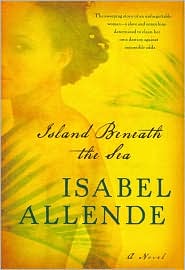
Island Beneath The Sea by Isabel Allende
480 pages
Published April 2011 by HarperCollins Publishers
Source: the publisher and TLC Book Tours
Toulouse Valmorain, in powdered wig, buckles on his shoes and the latest fashions and ideas from France, arrived in 1770, at age twenty, on the island that will eventually become Haiti. He has come to help his father but when he arrives, ill prepared for the conditions and the responsibilities of running a plantation, he finds that his father is dying and the plantation in shambles. Over the next few years, Valmorain manages to turn the land around but it is not until he finally finds, in Cuba, a Spanish bride, that he rebuilds his home.
To prepare for her arrival, Valmorain calls on the services of his friend, and former lover, VioletteBoisier. Violette literally puts his house in order. She hires for his wife a young slave girl, Zarite. Born into slavery to a white sailor and a slave mother she never knew, Zarite has lead a difficult life. In Valmorain's house and under his protection, Zarite (Tete) will no longer be beaten but will give birth to his children, be required to tend to his wife's every need as she is consumed by madness, and be denied the freedom he promises her for years.
The two will be tied together for decades to come as they flee the bloody slavery rebellion, seeking refuge in New Orleans. When Tete has the opportunity to escape Valmorain during the rebellion, she can't take it, knowing it would mean abandoning their daughter and his son, who she has raised as her own. In Louisiana, Valmorain will try to establish a plantation using more humane methods to treat his slaves as Zarite will fight to retain her own humanity, despite new humility, and to protect those she loves while trying to find love herself.
Allende is the queen of the sweeping historical sage about people you come to know intimately. This is the fourth book by Allende I've read and I went into it with high hopes for the kind of story that I have come to love. Before Allende writes a book, she clearly does a massive amount of research. Sometimes the book can get bogged in all of that research. Publisher Weekly's reviewer had a major problem with this, stating that Allende was offering nothing new. That well may be true in general, but there was a lot here that was new to me. I wasn't reading the book for new insights into history; I was reading the book for the story set in an historical context. Like Barbara Kingsolver, Allende can slip into moral lesson mode and occasionally falls back onto stereotypes.
All of which I forgive Allende because her story telling simply sweeps me up and carries me along. Her descriptions of place are beautiful, her characters (for the most part) are well-rounded, and there is an underlying tension throughout the book. Those of you who are regular readers know that I have a hard time with magic and spiritualism in a book, but when Allende does it, it works for me (in this book, it appears in the form of voodoo).
Most of this book was told as a third person narrative, but periodically Allende switched to Zarite's voice which was honest and poetic.
To learn more about Isabel Allende and her books, check out her website.
480 pages
Published April 2011 by HarperCollins Publishers
Source: the publisher and TLC Book Tours
Toulouse Valmorain, in powdered wig, buckles on his shoes and the latest fashions and ideas from France, arrived in 1770, at age twenty, on the island that will eventually become Haiti. He has come to help his father but when he arrives, ill prepared for the conditions and the responsibilities of running a plantation, he finds that his father is dying and the plantation in shambles. Over the next few years, Valmorain manages to turn the land around but it is not until he finally finds, in Cuba, a Spanish bride, that he rebuilds his home.
To prepare for her arrival, Valmorain calls on the services of his friend, and former lover, VioletteBoisier. Violette literally puts his house in order. She hires for his wife a young slave girl, Zarite. Born into slavery to a white sailor and a slave mother she never knew, Zarite has lead a difficult life. In Valmorain's house and under his protection, Zarite (Tete) will no longer be beaten but will give birth to his children, be required to tend to his wife's every need as she is consumed by madness, and be denied the freedom he promises her for years.
The two will be tied together for decades to come as they flee the bloody slavery rebellion, seeking refuge in New Orleans. When Tete has the opportunity to escape Valmorain during the rebellion, she can't take it, knowing it would mean abandoning their daughter and his son, who she has raised as her own. In Louisiana, Valmorain will try to establish a plantation using more humane methods to treat his slaves as Zarite will fight to retain her own humanity, despite new humility, and to protect those she loves while trying to find love herself.
Through the arc of their lives, they are influenced by a huge cast of characters including Dr. Parmentier, Valmorain's abolitionist friend; Sancho Garcia del Solar, Valmorain's vice-loving brother-in-law; Tante Rose, a slave who is natural healer and voodoo leader; and Hortense Guizot, Valmorain's second wife, a woman made the lives of all around her miserable.
Allende is the queen of the sweeping historical sage about people you come to know intimately. This is the fourth book by Allende I've read and I went into it with high hopes for the kind of story that I have come to love. Before Allende writes a book, she clearly does a massive amount of research. Sometimes the book can get bogged in all of that research. Publisher Weekly's reviewer had a major problem with this, stating that Allende was offering nothing new. That well may be true in general, but there was a lot here that was new to me. I wasn't reading the book for new insights into history; I was reading the book for the story set in an historical context. Like Barbara Kingsolver, Allende can slip into moral lesson mode and occasionally falls back onto stereotypes.
All of which I forgive Allende because her story telling simply sweeps me up and carries me along. Her descriptions of place are beautiful, her characters (for the most part) are well-rounded, and there is an underlying tension throughout the book. Those of you who are regular readers know that I have a hard time with magic and spiritualism in a book, but when Allende does it, it works for me (in this book, it appears in the form of voodoo).
Most of this book was told as a third person narrative, but periodically Allende switched to Zarite's voice which was honest and poetic.
Island Beneath the Sea is filled with passion, sadness, hope and heartbreak in the way that only Allende can do it."This is how they told it. This is how it happened in Bois Cayman. This is how it is written in the legend of the place they now call Haiti, the first independent republic of Negroes. I don't know what that means, but it must be important because the blacks say it with applause and praise and the whites say it with rage."
"Many [newborns] died of tetanus, paralyzed, their jaws frozen; that was one of the island's mysteries, because whites did not suffer from that disease. The masters did not suspect that those symptoms could be provoked, undetected, by sticking a fine needle into a soft part of the baby's head before the cranial bones hardened. In that way the baby went happily to the island beneath the sea without ever experiencing slavery."Thanks to TLC Book Tours for including me on this tour. For other reviews on this book and several others by Allende, please check out the full tour. My apologies for not getting this review posted on Thursday--thanks, Blogger, for being down most of the day!
To learn more about Isabel Allende and her books, check out her website.
Saturday, April 30, 2011
The Cailiffs of Baghdad, Georgia: A Novel by Mary Helen Stefaniak
The Cailiffs of Baghdad, Georgia by Mary Helen Stefaniak
352 pages
Published September 2010 by Norton, W. W. and Company
Source: bought it at The Bookworm and had it signed!
When Miss Grace Spivey arrives in Threestep, Georgia in 1939 to teach in the one-room classroom, she turns the small town on it's head. She's got a world view and the opinion that blacks are the equals of whites and every bit as entitled to a good education as any of the white children in her school. Gladys Cailiff, our eleven-year-old narrator for most of the book, takes an immediate liking to Miss Spivey and the Miss Spivey takes an immediate liking to all of the Cailiffs, including Gladys's brother's Ralphord and Force and sisters May and Ildred.
In The Cailiffs of Baghdad, George, Stefaniak as created her own version of The Thousand Nights And A Night, crafting a story withing a story within story, taking the reader from 1939 Georgia back in time to 1775 Baghdad, Iraq and 1864 Savannah, Georgia. She creates a Southern tale so spot on that it's hard to believe that this is a writer who was born in Milwaukee and now splits her time between Omaha and Iowa City. Stefaniak's mother is from Georgia and when I heard her speak last summer, she credited that family with much of the inspiration for this book.
In Gladys, Stefaniak has given the reader a delightful voice and captured that innocence and awe that only found in a child of that age. The book is filled with interesting, believable characters including Theo Boykin, the smartest person in the county who also happens to be black and Uncle Mack, the camel man. Stefaniak manages to touch on a number of themes including racism, religion, and big business vs. landowners. While the story stayed in 1939 Georgia, I was rapt. In the last third of the book, Stefaniak travels back in time, spending a long period away from Threestep. While this part of the book was certainly interesting, I found myself losing track of the original story and getting lost in all of the new characters. Overall, though, I found the book delightful, often nodding my head or chuckling. Publisher's Weekly and Kirkus Reviews both called the book "engaging" and I would have to agree.
To learn more about Steniak and her other books, including The Turk and My Mother, visit her website.
This wraps up my month dedicated to Omaha authors, although I've noticeably left out mystery/thriller writer Alex Kava (completely unintentionally!). I'll write more about her soon. In looking at Stefaniak's website, I see that the Nebraska Book Festival is coming up in May. I didn't even know such a thing existed! Unfortunately, I'm planning to be out of town that weekend but if my plans change, you know I'll be traveling to Lincoln instead to attend the Festival.
352 pages
Published September 2010 by Norton, W. W. and Company
Source: bought it at The Bookworm and had it signed!
When Miss Grace Spivey arrives in Threestep, Georgia in 1939 to teach in the one-room classroom, she turns the small town on it's head. She's got a world view and the opinion that blacks are the equals of whites and every bit as entitled to a good education as any of the white children in her school. Gladys Cailiff, our eleven-year-old narrator for most of the book, takes an immediate liking to Miss Spivey and the Miss Spivey takes an immediate liking to all of the Cailiffs, including Gladys's brother's Ralphord and Force and sisters May and Ildred.
Threestep is indeed remote and forgotten. "In 1938, a lot of folks in Piedmont County were still pretty much in awe of the miracle of the airwaves." Miss Spivey's introduces the children to The Thousand Nights and A Night, reading the children the Sir Richard Burton's translation after the local library proved to only have a children's picture book version."Two year later, she [Miss Spivey] told a cheery blue-suited woman from the WPA that she wanted to bring democracy and education to the poorest, darkest, most remote and forgotten corner of America.They sent her to Threestep, Georgia."
"Miss Spivey proceeded immediately to the "A" drawer herself to look for another edition of The Arabian Nights, but there was only the one. "A children's picture book!" she said then, sounding so put out that Miss Eunice Spears [the librarian] hurried over to assure her that, despite the turbans and all, there was nothing offensive or inappropriate for children in the book. She had made certain of that."Everyone becomes engrossed in the stories, especially Miss Spivey, who soon decides the spring festival the school usually puts on will now become an Arabian Nights celebration, complete with camels. Before long, the entire county becomes involved, although convincing the church leaders took some doing; after all, the people in the stories were "heathens." School is almost entirely devoted to the creation of costumes, the making of sets and the practicing of parts. But the involvement of the black people has the local Ku Klux Klan leader on edge and the entire celebration sets off a chain of events that will forever change the lives of everyone in Threestep.
In The Cailiffs of Baghdad, George, Stefaniak as created her own version of The Thousand Nights And A Night, crafting a story withing a story within story, taking the reader from 1939 Georgia back in time to 1775 Baghdad, Iraq and 1864 Savannah, Georgia. She creates a Southern tale so spot on that it's hard to believe that this is a writer who was born in Milwaukee and now splits her time between Omaha and Iowa City. Stefaniak's mother is from Georgia and when I heard her speak last summer, she credited that family with much of the inspiration for this book.
In Gladys, Stefaniak has given the reader a delightful voice and captured that innocence and awe that only found in a child of that age. The book is filled with interesting, believable characters including Theo Boykin, the smartest person in the county who also happens to be black and Uncle Mack, the camel man. Stefaniak manages to touch on a number of themes including racism, religion, and big business vs. landowners. While the story stayed in 1939 Georgia, I was rapt. In the last third of the book, Stefaniak travels back in time, spending a long period away from Threestep. While this part of the book was certainly interesting, I found myself losing track of the original story and getting lost in all of the new characters. Overall, though, I found the book delightful, often nodding my head or chuckling. Publisher's Weekly and Kirkus Reviews both called the book "engaging" and I would have to agree.
![]() |
| Stefaniak signing books at Omaha's The Bookworm |
To learn more about Steniak and her other books, including The Turk and My Mother, visit her website.
This wraps up my month dedicated to Omaha authors, although I've noticeably left out mystery/thriller writer Alex Kava (completely unintentionally!). I'll write more about her soon. In looking at Stefaniak's website, I see that the Nebraska Book Festival is coming up in May. I didn't even know such a thing existed! Unfortunately, I'm planning to be out of town that weekend but if my plans change, you know I'll be traveling to Lincoln instead to attend the Festival.
Wednesday, April 20, 2011
The Heretic's Daughter by Kathleen Kent
332 pages
Published October 2009 by Little, Brown and Company
Source: I bought it to read with The Omaha Bookworms
In December 1690, Sarah Carrier and her family moved from Billerica, Massachusetts to Andover to live with her grandmother. They weren't exactly chased out of Billerica but they weren't really welcome there any more. Soon they would no longer be welcome in Andover, either. Sarah's father, Thomas, has a past that frightens people and her mother is a woman far ahead of her time, unwilling to back down, unwilling to be silent.
Martha Carrier was one of the first women arrested and tried for witchcraft in the craze that swept the new world in 1692. She was not the last family member to be arrested. Sarah and three of her brothers were also arrested and held in the most deplorable of conditions. Over 150 other men, women and children accused of witchcraft were also arrested. Twenty six were tried and convicted in Salem Village alone. Nineteen were hanged; one man who refused to enter a plea was crushed to death by stones in an attempt to coerce a confession. It was one of the worst cases of mass hysteria in history.
Kathleen Kent is a tenth generation descendant of Martha Carrier. She is also the author The Wolves of Andover which is Thomas Carrier's story. The Omaha Bookworms were honored to get to speak with Ms. Kent last night via Skype, well we tried to Skype anyway. Due to stormy weather in her area, we weren't able to keep our Skype connection with Ms. Kent, but the phone worked just fine.
Ms. Kent told us that her fascination with Martha Carrier and the Salem witch trials began when she was only eight and first found out that she had a relative who had been accused of witchcraft. It kept her interest for years but not until she was approaching her 50th birthday did Ms. Kent finally decide it was time to write commit the story to paper. It's always interesting to talk with an author but this was an exceptional case because of the history involved. Ms. Kent talked about which parts of the story were family lore that she discovered to be true (a cow was fed pumpkins and gave golden milk, for example), which parts she learned from reading the trial records, and which parts were developed after extensive research. Ms. Kent is currently working on a third book, also historical fiction, but this one is not based on family history. Look for it, hopefully, in the fall of 2012! Thanks to Ms. Kent for spending so much time with us!
332 pages
Published October 2009 by Little, Brown and Company
Source: I bought it to read with The Omaha Bookworms
In December 1690, Sarah Carrier and her family moved from Billerica, Massachusetts to Andover to live with her grandmother. They weren't exactly chased out of Billerica but they weren't really welcome there any more. Soon they would no longer be welcome in Andover, either. Sarah's father, Thomas, has a past that frightens people and her mother is a woman far ahead of her time, unwilling to back down, unwilling to be silent.
"But Martha Carrier was like a deep pond, the surface of which was placid enough but deeply cold to the touch and which was filled beneath the surface with sharp rocks and treacherous choke roots. And she had a tongue, the sharpness of which would gut a man as quick as a Gloucester fisherman could clean a lamprey eel."The villagers weren't the only ones who didn't much care for Martha Carrier. Sarah found her to be cold and uncaring. After spending some time with her aunt and uncle when her own family was battling small pox, and seeing what a loving family could be like, Sarah was more miserable than ever in her own home. But as cries of witchcraft began to be heard in nearby Salem Village and the villagers of Andover begin to cry out against the Carrier family, Sarah will come to understand her mother in a way she had never thought possible.
Martha Carrier was one of the first women arrested and tried for witchcraft in the craze that swept the new world in 1692. She was not the last family member to be arrested. Sarah and three of her brothers were also arrested and held in the most deplorable of conditions. Over 150 other men, women and children accused of witchcraft were also arrested. Twenty six were tried and convicted in Salem Village alone. Nineteen were hanged; one man who refused to enter a plea was crushed to death by stones in an attempt to coerce a confession. It was one of the worst cases of mass hysteria in history.
Kathleen Kent is a tenth generation descendant of Martha Carrier. She is also the author The Wolves of Andover which is Thomas Carrier's story. The Omaha Bookworms were honored to get to speak with Ms. Kent last night via Skype, well we tried to Skype anyway. Due to stormy weather in her area, we weren't able to keep our Skype connection with Ms. Kent, but the phone worked just fine.
Ms. Kent told us that her fascination with Martha Carrier and the Salem witch trials began when she was only eight and first found out that she had a relative who had been accused of witchcraft. It kept her interest for years but not until she was approaching her 50th birthday did Ms. Kent finally decide it was time to write commit the story to paper. It's always interesting to talk with an author but this was an exceptional case because of the history involved. Ms. Kent talked about which parts of the story were family lore that she discovered to be true (a cow was fed pumpkins and gave golden milk, for example), which parts she learned from reading the trial records, and which parts were developed after extensive research. Ms. Kent is currently working on a third book, also historical fiction, but this one is not based on family history. Look for it, hopefully, in the fall of 2012! Thanks to Ms. Kent for spending so much time with us!
Thursday, March 17, 2011
Villette Readalong Week 6
Once again, poor suffering Lucy Snowe will have her heart broken. She is so heartsick because of Dr. John, and so embarrassed by the idea that others may be reading her letters from him and laughing at her, that she finally seals his letters in a bottle and buries it. Then the sad little thing is made to sit with Ginevra at a party so that Pauline can see if Dr. John prefers Pauline over Ginevra.
Lucy's relationship with Monsieur Paul becomes something of a roller coaster ride in these latest chapters. In one moment he is berating her and the next he is asking her to call him friend. Yet I think she actually thinks of their "friendship" as something of a game and delights in teasing M. Paul. But she also appreciates that he sees in her something that her long-time friends do not see. John speaks of her as "quiet Lucy" and says that she is over-grave in tastes and manners. But she writes of M. Paul "there starts up a little man, differing diametrically from all these, roundly charging you with being too airy and cheerful--too volatile and versatile--too flowery and coloury."
You may remember that last week, I was longing for Lucy to come out of her shell a bit, maybe even get angry. And what do you know? In these chapters, she finally does begin to show some spirit. After the party in which John did appear to choose Pauline over Ginevra, Lucy had to ride home with the latter. Of course, Ginevra was having a little spoiled fit and Lucy finally let her have it. And as M. Paul's attacks continue, Lucy finally has the courage to respond. At one point I was reminded of the movie "You've Got Mail." Meg Ryan's character at one point is bemoaning her inability to conjure up just the right response when she finds herself under attack. Later she ends up apologizing for finally finding herself able to do just that. Lucy makes no such apology; she feels, rightly so, entirely justified.
The emphasis at this point in the book seems to be on the relationship between Lucy and M. Paul but I really can't imagine, yet, what she might ever see in this man that she frequently refers to as "despotic." But while we are watching Lucy grow and change, maybe we'll get to see some changes in M. Paul as well that might make him more likable. One can only hope.
Lucy's relationship with Monsieur Paul becomes something of a roller coaster ride in these latest chapters. In one moment he is berating her and the next he is asking her to call him friend. Yet I think she actually thinks of their "friendship" as something of a game and delights in teasing M. Paul. But she also appreciates that he sees in her something that her long-time friends do not see. John speaks of her as "quiet Lucy" and says that she is over-grave in tastes and manners. But she writes of M. Paul "there starts up a little man, differing diametrically from all these, roundly charging you with being too airy and cheerful--too volatile and versatile--too flowery and coloury."
You may remember that last week, I was longing for Lucy to come out of her shell a bit, maybe even get angry. And what do you know? In these chapters, she finally does begin to show some spirit. After the party in which John did appear to choose Pauline over Ginevra, Lucy had to ride home with the latter. Of course, Ginevra was having a little spoiled fit and Lucy finally let her have it. And as M. Paul's attacks continue, Lucy finally has the courage to respond. At one point I was reminded of the movie "You've Got Mail." Meg Ryan's character at one point is bemoaning her inability to conjure up just the right response when she finds herself under attack. Later she ends up apologizing for finally finding herself able to do just that. Lucy makes no such apology; she feels, rightly so, entirely justified.
The emphasis at this point in the book seems to be on the relationship between Lucy and M. Paul but I really can't imagine, yet, what she might ever see in this man that she frequently refers to as "despotic." But while we are watching Lucy grow and change, maybe we'll get to see some changes in M. Paul as well that might make him more likable. One can only hope.
Thursday, March 10, 2011
Villette Readalong Weeks 4 and 5
Yes, that's right, I'm behind again. I'm trying to listen to this while I'm working and some days just don't yield much listening time!
Week Four's reading was a pleasant respite after all of the goings on in Week Three's reading. Lucy spent the time recovering from her breakdown at the home of Dr John and Mrs. Bretton. While she delighted in spending time with friends after spending so much time alone, they delighted in introducing her to the delights of Villette. Interestingly, Monsieur Paul Emmanuel, appears more and more in Lucy's story. When we were first introduced to him, Lucy had nothing nice at all to say about him, But when he finds her in an art gallery, sitting in front of a painting he doesn't approve of and moves her to more "appropriate" works, she finds his concern for her less annoying than you might expect. Gradually she seems to be finding good characteristics in M. Paul and they agree to be friends.
John's relationship with Ginevra Fanshawe, which we only just discovered, is, perhaps, irreparably damaged when, while at the theater, she snubs Mrs. Bretton and openly flirts with another man in front of him. Now that Lucy has spent so much time with John and finding him now unattached, her heart begins to run away with her a bit. But Lucy is nothing if not reasonable and she and her Reason spend a lot of time together and Reason generally seems to win. But it's not able to stop Lucy from beginning to visions of a ghost nun.
Just as Lucy begins to hope that John may care for her, Polly home and her father return in the guise of the de Bassompierres. Mr. Home has been given the title of Count and Polly is now a Countess. Despite the fact that she is still little more than a child, John becomes smitten with her. Now it is also revealed that Polly and Ginerva are cousins and poor Lucy has to put up with the foolishness of both of the girls. But she's more than willing to tolerate it because she's both exceedingly tolerant and unwilling to put her friendship with the families at risk.
I am so ready for Lucy to just take a chance, to cut loose a little bit and maybe even to throw a temper tantrum because she's so darn tired of being the poor little poor girl.
Week Four's reading was a pleasant respite after all of the goings on in Week Three's reading. Lucy spent the time recovering from her breakdown at the home of Dr John and Mrs. Bretton. While she delighted in spending time with friends after spending so much time alone, they delighted in introducing her to the delights of Villette. Interestingly, Monsieur Paul Emmanuel, appears more and more in Lucy's story. When we were first introduced to him, Lucy had nothing nice at all to say about him, But when he finds her in an art gallery, sitting in front of a painting he doesn't approve of and moves her to more "appropriate" works, she finds his concern for her less annoying than you might expect. Gradually she seems to be finding good characteristics in M. Paul and they agree to be friends.
John's relationship with Ginevra Fanshawe, which we only just discovered, is, perhaps, irreparably damaged when, while at the theater, she snubs Mrs. Bretton and openly flirts with another man in front of him. Now that Lucy has spent so much time with John and finding him now unattached, her heart begins to run away with her a bit. But Lucy is nothing if not reasonable and she and her Reason spend a lot of time together and Reason generally seems to win. But it's not able to stop Lucy from beginning to visions of a ghost nun.
Just as Lucy begins to hope that John may care for her, Polly home and her father return in the guise of the de Bassompierres. Mr. Home has been given the title of Count and Polly is now a Countess. Despite the fact that she is still little more than a child, John becomes smitten with her. Now it is also revealed that Polly and Ginerva are cousins and poor Lucy has to put up with the foolishness of both of the girls. But she's more than willing to tolerate it because she's both exceedingly tolerant and unwilling to put her friendship with the families at risk.
I am so ready for Lucy to just take a chance, to cut loose a little bit and maybe even to throw a temper tantrum because she's so darn tired of being the poor little poor girl.
Monday, January 31, 2011
The Awakening by Kate Chopin
First published in 1899
Source: I own a copy but this time I listened to it on Librivox
Edna Pontellier, 28-year-old wife and mother of two, is summering with her family at Grand Isle as they, and so many other wealthy New Orleans families, have done for a number of years, when her thoughts and feelings begin to make her question the life she has chosen.
In the late 19th century, Edna's path was quite set from the moment she was born. A young woman was expected to play a little piano, to paint a little, and to learn to become the wife and mother she was destined to become. Nothing more was to expected, nothing more was to be hoped for. But Edna had never fit the mold. She didn't marry her husband, Leonce, because she was in love with him; in fact, she appreciated not being in love with him. She married him for dignity, because he loved her and because her family did not approve. When the boys are young, though, Leonce begins to believe there is a shortcoming in his wife; he can't name it but knows that she's not a "mother wife." In this, he is right. Edna loves her boys, but more in the way that an aunt would rather than a mother.
At Grand Isle, Edna begins a flirtation with one of the sons of the owner. Robert LeBrun attaches himself each summer to one of the women staying at the resort but the women never really take him seriously. It is not until Robert leaves for Mexico that Edna realizes how deep her feelings for him have become. Her "mantel of reserve" has been loosened and once the family returns to New Orleans it becomes obvious that Edna is unable and unwilling to go back to life as she has known it.
As someone who is something of a modern day "mother wife" (I stayed home for a dozen years to raise my children), I had a hard time connecting with Edna at first. But I also had to acknowledge that doing that was my own choice, a choice I could quite easily not have made. A choice Edna did not have. When Kate Chopin wrote this book, it was considered quite shocking. After all, Edna eventually abandons her family and carries on an adulterous affair, something that would even today raise eyebrows. Today, it's considered a major achievement.
Chopin has populated this story with a wealth of characters representing all facets of life in this time period. Edna's friend Adele Ratignolle is the epitome of what a wife and mother was expected to be at that time. Mademoiselle Reisz, a single woman pursuing her own passion without regard to convention, becomes Edna's role model. Leonce is a man who loves his wife but thinks of her as not much more than a possession. The secondary and minor characters in the book are all in place for a reason, making it a book that is ideal for teaching.
But this story is much more than a lesson. It is a beautifully written work that is every bit as relevant today as it was more than 100 years ago.
First published in 1899
Source: I own a copy but this time I listened to it on Librivox
Edna Pontellier, 28-year-old wife and mother of two, is summering with her family at Grand Isle as they, and so many other wealthy New Orleans families, have done for a number of years, when her thoughts and feelings begin to make her question the life she has chosen.
In the late 19th century, Edna's path was quite set from the moment she was born. A young woman was expected to play a little piano, to paint a little, and to learn to become the wife and mother she was destined to become. Nothing more was to expected, nothing more was to be hoped for. But Edna had never fit the mold. She didn't marry her husband, Leonce, because she was in love with him; in fact, she appreciated not being in love with him. She married him for dignity, because he loved her and because her family did not approve. When the boys are young, though, Leonce begins to believe there is a shortcoming in his wife; he can't name it but knows that she's not a "mother wife." In this, he is right. Edna loves her boys, but more in the way that an aunt would rather than a mother.
At Grand Isle, Edna begins a flirtation with one of the sons of the owner. Robert LeBrun attaches himself each summer to one of the women staying at the resort but the women never really take him seriously. It is not until Robert leaves for Mexico that Edna realizes how deep her feelings for him have become. Her "mantel of reserve" has been loosened and once the family returns to New Orleans it becomes obvious that Edna is unable and unwilling to go back to life as she has known it.
As someone who is something of a modern day "mother wife" (I stayed home for a dozen years to raise my children), I had a hard time connecting with Edna at first. But I also had to acknowledge that doing that was my own choice, a choice I could quite easily not have made. A choice Edna did not have. When Kate Chopin wrote this book, it was considered quite shocking. After all, Edna eventually abandons her family and carries on an adulterous affair, something that would even today raise eyebrows. Today, it's considered a major achievement.
Chopin has populated this story with a wealth of characters representing all facets of life in this time period. Edna's friend Adele Ratignolle is the epitome of what a wife and mother was expected to be at that time. Mademoiselle Reisz, a single woman pursuing her own passion without regard to convention, becomes Edna's role model. Leonce is a man who loves his wife but thinks of her as not much more than a possession. The secondary and minor characters in the book are all in place for a reason, making it a book that is ideal for teaching.
But this story is much more than a lesson. It is a beautifully written work that is every bit as relevant today as it was more than 100 years ago.
Tuesday, January 25, 2011
Wench by Dolen Perkins-Valdez
293 pages
Published January 2010 by Harper Collins, now out in paperback
Source: the publisher and TLC Book Tours
In the mid-19th century there was a resort, Tawawa House, in Ohio where slave owners vacationed with their slave mistresses. The beautiful cover of this book might lead readers to believe that this was a place where these women lived a life of leisure and pampering, quite different from their lives on the plantation. Such was not the case. While there was perhaps slightly more leisure time, these slaves were still expected to keep the cottages they and their masters stayed in clean, still expected to service their masters, and still beaten for any infraction. Although Ohio was not a slave state, the slaves that journeyed to Tawawa House knew they risks for attempting to escape were nearly as great as if they tried to run away from their plantations.
In Wench, Perkins-Valdez introduces the reader to a group of slaves and their owners who regularly travel to Tawawa House in the summers. Rennie, the oldest, is also the saddest and the most resigned to her lot in life. Sir, her owner, is also her half brother, a man who is willing to trade her services for other pleasures. Sweet is the youngest and pregnant when we first meet her. Despite her pregnancy, Master does not hesitate to beat Sweet when he sees fit and because of her pregnancy and the four other children she has left on the plantation, she is least likely to make a run. Lizze, actually loves her owner, Drayle, and believes that he will one day free their children if she just treats him the right way.
When Mawu, a red-headed, freckled slave comes into their midst one summer, she makes them all question their lives and begins to put thoughts into their heads about a different life. Her owner, Tip, is by far the most vicious of the owners and when he finds out that Mawu is contemplating running away, he viciously beats her in front of the other slaves. Instead of causing them to give up on their ideas of freedom, it drives the slaves to contemplate just how close they are to freedom and to question just how much they would be willing to give up to have it.
From the moment I first heard about this book, I knew I wanted to read it and the rave reviews it got only made me want to read it more. By the time I finally did read it, I was concerned that it wouldn't be able to live up to my expectations. Wench more than met my expectations. Perkins-Valdez does a remarkable job in her debut of bringing these women to life and of exploring the complicated relationship between slave owners and their mistresses. Heartbreaking and hopeful at the same time, you can't help but imagine yourself in these women's positions. Would you be able to give up your children, risk what might happen to anyone you cared about if it meant that you could leave a life of abuse and control?
Thanks to TLC Book Tours for including me in this tour! For more reviews of this book, see the full list of tour sites.
293 pages
Published January 2010 by Harper Collins, now out in paperback
Source: the publisher and TLC Book Tours
In the mid-19th century there was a resort, Tawawa House, in Ohio where slave owners vacationed with their slave mistresses. The beautiful cover of this book might lead readers to believe that this was a place where these women lived a life of leisure and pampering, quite different from their lives on the plantation. Such was not the case. While there was perhaps slightly more leisure time, these slaves were still expected to keep the cottages they and their masters stayed in clean, still expected to service their masters, and still beaten for any infraction. Although Ohio was not a slave state, the slaves that journeyed to Tawawa House knew they risks for attempting to escape were nearly as great as if they tried to run away from their plantations.
In Wench, Perkins-Valdez introduces the reader to a group of slaves and their owners who regularly travel to Tawawa House in the summers. Rennie, the oldest, is also the saddest and the most resigned to her lot in life. Sir, her owner, is also her half brother, a man who is willing to trade her services for other pleasures. Sweet is the youngest and pregnant when we first meet her. Despite her pregnancy, Master does not hesitate to beat Sweet when he sees fit and because of her pregnancy and the four other children she has left on the plantation, she is least likely to make a run. Lizze, actually loves her owner, Drayle, and believes that he will one day free their children if she just treats him the right way.
When Mawu, a red-headed, freckled slave comes into their midst one summer, she makes them all question their lives and begins to put thoughts into their heads about a different life. Her owner, Tip, is by far the most vicious of the owners and when he finds out that Mawu is contemplating running away, he viciously beats her in front of the other slaves. Instead of causing them to give up on their ideas of freedom, it drives the slaves to contemplate just how close they are to freedom and to question just how much they would be willing to give up to have it.
From the moment I first heard about this book, I knew I wanted to read it and the rave reviews it got only made me want to read it more. By the time I finally did read it, I was concerned that it wouldn't be able to live up to my expectations. Wench more than met my expectations. Perkins-Valdez does a remarkable job in her debut of bringing these women to life and of exploring the complicated relationship between slave owners and their mistresses. Heartbreaking and hopeful at the same time, you can't help but imagine yourself in these women's positions. Would you be able to give up your children, risk what might happen to anyone you cared about if it meant that you could leave a life of abuse and control?
Thanks to TLC Book Tours for including me in this tour! For more reviews of this book, see the full list of tour sites.
Monday, January 17, 2011
The Gentleman Poet: A Novel of Love, Danger, and Shakespeare's The Tempest by Kathryn Johnson
319 pages
Published September 2010 by HarperCollins Publishers
Source: the author for this review
In the early 17th century, a ship named Sea Venture, on its way to the Virginia colony, was shipwrecked instead on the Bermudas, then known as the Isle of Devils. William Strachey was one of the passengers on the ship and his account of the passengers survival on the island inspired Johnson to write this fictionalized version of events . It may also have inspired William Shakespeare to write his play, The Tempest" as some believe that he may have had access to the accounts of the survivors before they were otherwise published.
Elizabeth Persons (an actual passenger on Sea Venture) is the shy, orphaned servant to Mistress Horton, benefactress to the Virginia Company. Both are passengers in a flotilla headed for the Virginia colony. When a hurricane blows the ship off course, destroying much of the foodstuffs on board, the 155 passengers aboard Sea Venture find themselves stranded on the Bermuda islands. As much as can be saved is removed onto shore but it's quite clear there is not enough food unless some is quickly found on the islands. Elizabeth quickly proves herself useful in doing this and despite Mistress Horton's objections, eventually finds herself preparing meals for the survivors on one of the islands. She also finds herself befriending a man named William Strachey who is supposed to be the ship's historian but more often than not seems to be writing other things. She also finds herself the object of the ship's cook, Thomas Powell but Elizabeth has no intention of being any one's wife, ever. What secrets might Elizabeth and William be hiding? And how will the survivors ever make it off the islands?
Although sometimes predictable, Johnson has crafted an entertaining look at what life must have been like for those brave enough to risk the trip across Atlantic to an unknown future. The book is well-researched and the descriptions of the islands make it sound like a place the stranded passengers might have preferred never to have left. Johnson has also included enough realism about the kinds of people that might have been on such a ship to give the book some tension needed to offset the lighter moments. The idea that Will Strachey might actually have been William Shakespeare was my favorite part of the book.
Honestly, I had a hard time buying into the idea that Elizabeth might become attracted to Thomas given his approach and her initial very vehement refusals. But I know that this kind of thing is also what draws so many to historical romances. And Johnson, with about 40 books published, certainly knows more about what works for lovers of historical fiction that I do.
Although I did find some of the story line predictable, I was completely surprised by the ending and found it very satisfying as I did the book overall.
Kathryn Johnson doesn't just write books, she helps others who want to become writers at Write by You. For tips on writing, check out Kathryn's blog.
319 pages
Published September 2010 by HarperCollins Publishers
Source: the author for this review
In the early 17th century, a ship named Sea Venture, on its way to the Virginia colony, was shipwrecked instead on the Bermudas, then known as the Isle of Devils. William Strachey was one of the passengers on the ship and his account of the passengers survival on the island inspired Johnson to write this fictionalized version of events . It may also have inspired William Shakespeare to write his play, The Tempest" as some believe that he may have had access to the accounts of the survivors before they were otherwise published.
Elizabeth Persons (an actual passenger on Sea Venture) is the shy, orphaned servant to Mistress Horton, benefactress to the Virginia Company. Both are passengers in a flotilla headed for the Virginia colony. When a hurricane blows the ship off course, destroying much of the foodstuffs on board, the 155 passengers aboard Sea Venture find themselves stranded on the Bermuda islands. As much as can be saved is removed onto shore but it's quite clear there is not enough food unless some is quickly found on the islands. Elizabeth quickly proves herself useful in doing this and despite Mistress Horton's objections, eventually finds herself preparing meals for the survivors on one of the islands. She also finds herself befriending a man named William Strachey who is supposed to be the ship's historian but more often than not seems to be writing other things. She also finds herself the object of the ship's cook, Thomas Powell but Elizabeth has no intention of being any one's wife, ever. What secrets might Elizabeth and William be hiding? And how will the survivors ever make it off the islands?
Although sometimes predictable, Johnson has crafted an entertaining look at what life must have been like for those brave enough to risk the trip across Atlantic to an unknown future. The book is well-researched and the descriptions of the islands make it sound like a place the stranded passengers might have preferred never to have left. Johnson has also included enough realism about the kinds of people that might have been on such a ship to give the book some tension needed to offset the lighter moments. The idea that Will Strachey might actually have been William Shakespeare was my favorite part of the book.
Honestly, I had a hard time buying into the idea that Elizabeth might become attracted to Thomas given his approach and her initial very vehement refusals. But I know that this kind of thing is also what draws so many to historical romances. And Johnson, with about 40 books published, certainly knows more about what works for lovers of historical fiction that I do.
Although I did find some of the story line predictable, I was completely surprised by the ending and found it very satisfying as I did the book overall.
Kathryn Johnson doesn't just write books, she helps others who want to become writers at Write by You. For tips on writing, check out Kathryn's blog.
Wednesday, December 29, 2010
The Forgotten Garden by Kate Morton
Published April 2009 by Simon Schuster Adult
Source: I bought this one to read with the Omaha Bookworms
In 1913 a dockmaster, Hugh, discovers a little girl left on the dock in Australia, entirely alone and with nothing more than a small suitcase and a lovely book of fairy tales. The man takes the little girl home when no one claims her and he and his wife raise her as their own and call her Nell. All the little girl can tell them is that she was with "The Authoress" and that she has been playing a game of hide-and-seek.
On Nell's twenty-first birthday, her adoptive parents tell her the truth and Nell's life is never the same; she spends the rest of it trying to solve the mystery of her identity. The journey takes her to Blackhurst Manor and the Cornish coast of England. Nell returns to Australia to wrap up her life there before returning to England permanently, but things take a turn that prevents that from happening. Nell's estranged daughter drops off her own daughter with Nell then takes off leaving the grandmother to raise a grandchild she barely knows. Over time the two become close, but Nell never discloses her mysterious past nor the anything about the cottage she has purchased next to Blackhurst Manor. It is not until Nell's death that all of this comes to light and Cassandra sets off to uncover her grandmother's first life and, perhaps, start a new one herself.
Morton weaves together three narratives to tell the story of Nell, moving between the turn of the 20th-century; 1975, when Nell was finally able to travel to England for the first time; and 2005, when Cassandra takes up her search. There are a lot of characters to keep track of and with the constantly shifting narrative it was sometimes difficult to keep track of what was going on in the book. I'm actually a big fan of shifting narratives where mysteries are involved and generally have no trouble with the idea of moving back and forth in time so none of that bothered me much.
What did bother me was the shifting idea of what a four-year-old could remember and how much an adult might remember from when she was that age. The reader needs to buy into the idea that a four-year-old who has made that long a boat journey not only would not have been found but would never mention her own name or anything that might be a clue as to her identity. Then, when Nell is much older, the reader is expected to believe that a few clues will jar long, detailed memories. There may be some for whom that is possible; but as someone who only has very fleeting memories of being that age, I just couldn't get past that. There were also some plot points that didn't work for me, I wasn't surprised by the big reveal toward the end of the book, and I felt that a good fifty pages could have been cut from the book.
Still, despite all of those problems, I liked the book. The essential mystery interested me and I liked many of the characters, particularly those from the earliest time frame. As a book club selection, I'm hard pressed to say whether or not it was a good choice. Only one person who made it to our meeting in the month that we read this had actually finished the book so we couldn't really discuss it. My opinion is that while this is a pleasant enough book, it's not necessarily book-club worthy.
Published April 2009 by Simon Schuster Adult
Source: I bought this one to read with the Omaha Bookworms
In 1913 a dockmaster, Hugh, discovers a little girl left on the dock in Australia, entirely alone and with nothing more than a small suitcase and a lovely book of fairy tales. The man takes the little girl home when no one claims her and he and his wife raise her as their own and call her Nell. All the little girl can tell them is that she was with "The Authoress" and that she has been playing a game of hide-and-seek.
On Nell's twenty-first birthday, her adoptive parents tell her the truth and Nell's life is never the same; she spends the rest of it trying to solve the mystery of her identity. The journey takes her to Blackhurst Manor and the Cornish coast of England. Nell returns to Australia to wrap up her life there before returning to England permanently, but things take a turn that prevents that from happening. Nell's estranged daughter drops off her own daughter with Nell then takes off leaving the grandmother to raise a grandchild she barely knows. Over time the two become close, but Nell never discloses her mysterious past nor the anything about the cottage she has purchased next to Blackhurst Manor. It is not until Nell's death that all of this comes to light and Cassandra sets off to uncover her grandmother's first life and, perhaps, start a new one herself.
Morton weaves together three narratives to tell the story of Nell, moving between the turn of the 20th-century; 1975, when Nell was finally able to travel to England for the first time; and 2005, when Cassandra takes up her search. There are a lot of characters to keep track of and with the constantly shifting narrative it was sometimes difficult to keep track of what was going on in the book. I'm actually a big fan of shifting narratives where mysteries are involved and generally have no trouble with the idea of moving back and forth in time so none of that bothered me much.
What did bother me was the shifting idea of what a four-year-old could remember and how much an adult might remember from when she was that age. The reader needs to buy into the idea that a four-year-old who has made that long a boat journey not only would not have been found but would never mention her own name or anything that might be a clue as to her identity. Then, when Nell is much older, the reader is expected to believe that a few clues will jar long, detailed memories. There may be some for whom that is possible; but as someone who only has very fleeting memories of being that age, I just couldn't get past that. There were also some plot points that didn't work for me, I wasn't surprised by the big reveal toward the end of the book, and I felt that a good fifty pages could have been cut from the book.
Still, despite all of those problems, I liked the book. The essential mystery interested me and I liked many of the characters, particularly those from the earliest time frame. As a book club selection, I'm hard pressed to say whether or not it was a good choice. Only one person who made it to our meeting in the month that we read this had actually finished the book so we couldn't really discuss it. My opinion is that while this is a pleasant enough book, it's not necessarily book-club worthy.
Subscribe to:
Posts (Atom)