Showing posts with label TLC Book Tours. Show all posts

Wednesday, March 28, 2012

Elegy for Eddie: A Maisie Dobbs Novel by Jacqueline Winspear

Elegy for Eddie: A Maisie Dobbs Novel by Jacqueline Winspear
Published: March 27, 2012 by HarperCollins Publishing
Source: this copy courtesy of the publisher for TLC Book Tours

In this ninth book in the Maisie Dobbs series, Maisie and her team are hired by a group of costmongers (fruit and vegetable street venders) to investigate the suspicious death of Eddie Pettit. Maise grew up in the same neighbor hood as Eddie and knew him to be a kind, gentle, if somewhat slow person who was what we would now call a horse whisperer. The police refuse to investigate what appears to be merely an accident but these men Maisie has known all of her life are convinced that Eddie's death was no accident. As Maisie and her team begin to investigate, they quickly discover that there is much more to this case than simply the death of a common man. Set in 1933, Winspear brings the behind the scenes build up to the coming Second World War right into Maisie's life as her probing leads her to question a friend and brings the press and a certain Mr. Winston Churchill into the fray.

As with The Mapping of Love and Death, Elegy for Eddie is as much about Maisie as a person as it is about her as an investigator. In this book, Maisie, who appears to have a propensity for introspection, begins to question the motives behind her acts of kindness, her feelings about her new wealth and, above all, her feelings for Viscount James Compton.

Both of the Maisie Dobbs books I've read this month, could very easily be books about Maisie and her circle of friends that happen to have a mystery included as mystery stories that happen to rely heavily on the characters involved. For me, this is both a great asset to the books and a deterrent. Any time you write a series with recurring characters you have to make a choice - will the reader absolutely need to start at the beginning if they want to know what's going on with the characters or will you figure out a way to get new readers up to speed in each book. Winspear has made the latter choice, a choice I very much appreciated when I read The Mapping of Love and Death but here I did find it to be a bit in my way as I read. Still, easy enough to skim over those bits and get on with the lives of Billy, Sandra, Priscilla, James, Frankie, and, Maisie as they move forward with their lives, loves, and difficulties.

For other opinions about this book, check out Word Lily's review, Ryan's review at Wordsmithsonia, and Leeswammes' review. Thanks to TLC Book Tours for letting me help celebrate "March is Maisie Month!"

Monday, March 12, 2012

The Mapping of Love and Death: A Maisie Dobbs Novel by Jacqueline Winspear

The Mapping of Love and Death: A Maisie Dobbs Novel by Jacqueline Winspear
Published February 2011 by HarperCollins Publishing
Source: the copy courtesy of the publisher and TLC Book Tours

Well, this is embarrassing! As you may have noticed from the icon on my sidebar, March is Maisie Month and in honor of that bloggers on the tour for the latest Maisie Dobbs novel, Elegy for Eddie, aren't reading just that novel but one or more of the previous eight Maisie novels. I committed to two, the new one and the seventh, The Mapping of Love and Death. And then I promptly wrote down the wrong dates for the reviews of each book. So this weekend I was happily reading Elegy for Eddie in preparation for my review of it today. Oops - for some reason late yesterday I finally actually looked at the tour information and realized I had read the books out of order. I promptly switched books and I'm about half way through The Mapping of Love and Death this morning. I'll be finishing the book today and will have my full review up this evening.

**My Review**

In The Mapping of Love and Death, private investigator Maisie Dobbs has been hired to investigate a mystery involving an American cartographer killed during World War I. Wealthy son of British ex-patriot Edward Clifton, Michael Clifton has only just bought some land in California with the certainty that oil will be found there when Britain announces war with Germany. Feeling a duty to his father's homeland, Michael immediately leaves for England leaving behind the truth behind his land purchase.

Sixteen years after he went missing, his body has been discovered, along with some letters from a woman who his parents would like Maisie to find.But there is more to the story that even his mother isn't aware of; Michael's father is convinced that Michael was murdered. When Maisie's clients are brutally assaulted in their hotel room, Maisie's investigation takes on a much greater sense of urgency.

Jacqueline Winspear fills her Maisie Dobbs books with a wonderful supporting cast including her devoted father, her beloved mentor, her employee, Billy, and her best friend Priscilla. Clearly these characters have developed throughout the series but Winspear does a fine job of giving the reader enough information to get up to speed with the relationships but doesn't burden readers with background that could take away from the story line.

I'm sure these mysteries fall into the "cozy" mystery genre but I feel like there is more depth to the Maisie books that I typically find in so-called cozy mysteries. These characters carry a lot of very palpable pain. But Winspear doesn't let her stories get bogged down in that pain or the mystery, bringing plenty of humor to the books as well. I was also impressed with the way Winspear managed to keep the investigative portion of the book moving forward while retaining the real life stories of the characters. There is also much to be learned about the time period, and in this case cartography, without getting weighed down in her research.


I'm sorry to have started so late in the series. I'll definitely pick up the next book but I'm not sure I can go back to the beginning knowing so much already about what will happen to the characters. I will, however, be looking forward to the tenth book!

Monday, January 16, 2012

The Western Lit Survival Kit by Sandra Newman

The Western Lit Survival Kit: An Irreverent Guide to the Classics from Homer to Faulkner
by Sandra Newman
256 pages
Published January 2012 by Penguin Group
Source: the publisher and TLC Book Tours

When this book arrived in the mail, it was immediately grabbed up by The Big Guy, a person who started working on a Master's degree in English Literature before he switched to a more useful degree in business. Now you've got to understand something about The Big Guy and books. He loves them, he really does but he only picks one up to read for short periods at a time and I thought he might never get this one finished in time for me to read it. And he didn't. So while he sits here next to me watching football, I'm going to have him dictate his review of this one.

In The Western Lit Survival Kit, Newman does what so many others have been unable to do, she makes reading the "books you really should read" sound like they just might be readable and possibly even fun. Newman takes the reader from Ancient Greece straight through to what she calls The Messy Twentieth. In the process, Newman educates the reader as to the most notable books and authors of each period, never forgetting to keep the reader entertained.
"Most of what you need to know about Greek lyric poets is Sappho...In a time when women were still acceptable birthday presents, Sappho's status was unprecedented."
Newman also gives a brief introduction to each time period and often compares that period to current times to make the reader better understand the atmosphere in which the authors were working. Perhaps the greatest asset of the book, for the reader trying to decide whether or not to tackle a particular work, are the graphs that Newman includes for each book that she references. Each book is graded on a scale of one to ten on three counts: importance, difficulty and fun. If you are, for example, looking to tackle something that's truly considered an important work and which you are willing to read regardless of difficulty or the fun it might offer, you might try John Milton's Paradise Lost. But if you'd like to pick up something that is both important and fun, then you could look to Shakespeare's Othello. Want something that's both important and fun but not as difficult as Othello? You might pick up Emily Dickinson's poems or Mark Twain's Adventures of Huckleberry Finn. And when you look up that last book, you can also find that Newman compared Twain to Jon Stewart and that Ernest Hemingway was often cited as saying that "all modern American literature comes from Huckleberry Finn."

The Big Guy says that Newman is very bright, very witty and very educated. The reader should have at least a moderate level of literary education to catch all of Newman's witticisms. The information is presented in an entertaining way that gives the reader the key points that he/she needs to know about the book as well as giving an insider's perspective. Unlike so many books these days, The Big Guy says this is one book that is "as advertised." Neither of us keeps many books but he says that this one is a keeper as an excellent reference as each of us tries to work our way through the "books we really must read" and to help us decide which ones we really do want to tackle.

Thanks to TLC Book Tours for allowing us to be on the tour for this exceptional book. and thanks to The Big Guy for sharing his thoughts!

For more opinions on this book, please check out the full tour. Sandra Newman is the author of several novels, a memoir and two other non-fiction works.

Wednesday, November 30, 2011

Conversations and Cosmopolitans by Robert Rave and Jane Rave and a Giveaway

Conversations and Cosmopolitans: Awkward Moments, Mixed Drinks, and How a Mother and Son Finally Shared Who They Really Are 
by Robert Rave and Jane Rave
304 pages
Published November 2011 by St. Martin's Press
Source: the publisher and TLC Book Tours

At twenty one, Robert Rave had recently had some big changes in his life - he'd recently graduated from college and had just moved to New York City from a small town in Indiana. But Robert had, evidently, decided that wasn't enough change for him. So he sat down and wrote a letter to his sensible, Midwestern parents, a long letter telling them that their youngest son was gay. Nervous about their reaction, Robert tried to answer all of the questions they might have in that letter. When it arrived at their house, Jane Rave was, understandably a little upset and called her husband to come to discuss it with him. His reaction? "At then end of the day, does it really matter? He's our son. He was before the letter. Why should it change now?"

Which was, in the end, pretty much the way Jane handled it as well. She had no problem with the idea that her son was gay, she didn't care what other people thought of him. Her main worry was that Robert would end up alone. Otherwise, she made it her mission to try to educate people about what being gay means, that it's just a part of her son's life, it does not define him. Every gay or lesbian person should be so lucky to have parents like Robert's.

The book is a series of stories of how a small-town Midwestern boy learned to live as a "out" gay man in the big city. Robert tells his stories, then Jane gives her thoughts and perspective on what Robert has written. There are chapters about Robert teaching Jane the lingo of the gay culture, Internet dating, therapists, and finding love. These are things the two discussed in their at least weekly telephone conversations as they became closer than ever.

Robert's stories have a very conversational appeal, although I did occasionally feel that they went on a bit longer and into more detail than they needed to. Jane's responses felt more thought out, the kind of advice you get from your mom when she's had time to carefully consider how she's going to discuss something with you. Even given that I sometimes had a hard time believing that these were Jane's initial thoughts when certain situations presented themselves, this lady is full of good advice. Her son is clearly aware that his mom is one smart, sensible woman who helped him become the person he is by opening up and showing him the person she really is.

"The best way to meet people is to simply be authentic," she said. I didn't realize the truth of this advice until years later, while sipping cosmos in the basement of an ultra-trendy Manhattan restaurant. She wasn't impressed by the restaurant, the food, the waitstaff, or the semi-celebrities. She was just here being herself and enjoying a night out with her son."

Robert and Jane clearly have the kind of relationship most parents and children would like to have. I appreciate them sharing their story with a sense of candor and fun. For other opinions on the book, check out the full TLC Book Tour. Follow Robert on Facebook to learn more about his other books. Thanks to TLC Book Tours for including me in this tour!

Thanks to the publisher, I have one copy of Conversations and Cosmopolitans to giveaway. To enter, you must be a U.S. resident; I'll draw the winner Sunday, December 4th. Please leave me the best advice your mom ever gave you and a way to get a hold of you. My favorite piece of advice will win!

Tuesday, November 8, 2011

Camp Nine by Vivienne Schiffer

Camp Nine by Vivienne Schiffer
198 pages
Published The University of Arkansas Press October 2011
Source: TLC Book Tours and the publisher

Twelve-year-old Chess Morton lives in Rook, Arkansas, a speck of a town in the Black Bayou, with her widowed mother. Despite living deep in the south in the early 1940's, Chess lives her life largely oblivious to the world around her. Until her grandfather sells a piece of land that Chess inherited from her father to the U.S. Government. Following the bombing of Pearl Harbor, the government relocated thousands of Japanese Americans to camp throughout the U.S. Camp Nine, one of these camps, sprang from the land that had been Chess' and would serve to change her life.

Chess' mother offers to teach art lessons to the prisoners of Camp Nine, befriending many of the families, particularly the Matsuis. Although reluctant to have anything to do with the camp at first, Chess is soon fast friends with both of the Matsui boys. Her relationship with each of them will enrich and enlighten her but it will be many years later before David Matsui finally teaches Chess exactly what it was that she was protected from as she was growing up in the bayou.

This is one of those books that made me glad that I've always been willing to take a chance with books I've never heard of; thanks to TLC Book Tours for always bringing them to my attention. Schiffer's debut is lovely and charming in a way that is utterly unexpected given the very tough subjects that it tackles. She immerses her reader deep into the Mississippi delta and an area of open racism and brings to life the divide between black and white, rich and poor. Chess brings to mind an older Scout Finch as she comes to terms with the reality of the relationships between herself and those around her. Just as Scout came to view her father as a complete person, Chess comes to see her mother as someone more than just a mother.
"She never voiced her frustration about it to me, but I realize she could have picked up and left with me then, gone to another state, and fought him [Chess' grandfather]. But she understood that my place was on the plantation, whatever it might mean to her personal freedom. I wish I'd understood then all of the choices she made to preserve my interests over her own."

 Readers will undoubtedly recall Jamie Ford's The Hotel On The Corner of Bitter and Sweet when reading Camp Nine, as both deal with the Japanese interment camps. But where Hotel dealt strictly with the situation from the Japanese point of view, Camp Nine details how the impact the camps may have had on the areas surrounding them as well as bringing to light life in these "camps."

Camp Nine would make a wonderful book club selection with much to discuss and a book to enjoy. For more opinions on this book, check out the full tour at TLC Book Tours.

Vivienne Schiffer

Monday, October 31, 2011

Instant City by Steve Inskeep

Instant City: Life and Death In Karachi by Steve Inskeep
304 pages
Published October 2011 by Penguin Group
Source: the publisher and TLC Book Tours

On December 28, 2009 a bomb blew up on the streets of Karachi, Pakistan as Shia Muslims marched in their annual Ashura procession marking the death long ago of the Prophet Mohammed's grandson, Hussein.  Who placed the bomb? Who set the fires that destroyed blocks of nearby buildings the same day? In most cities, this would be a day that would long be remembered for its violence. For Karachi, it has almost become par for the course.

Inskeep uses the events of this day to look at the larger problem that is the instability in the country of Pakistan, most visibly in Karachi, which Inskeep calls an "instant city." He defines "instant city" as "a metropolitan area that's grown since 1945 at a substantially higher rate than the population of the country in which it belongs." According to conservative estimates, Karachi has grown at least 30 times larger than it was in 1945, most of the grow occurring in the weeks following the partition of India into two countries, India and Pakistan.

Using December 28, 2009 as a way of exploring the greater problems plaguing Karachi and Pakistant, Inskeep introduces his readers to a number of people, past and present, those who influenced Pakistan as it grew following Partition and those who were present the day of the bombing. Historically Inskeep looks at the divide between the sects of Islam, the friction between India's majority Hindu population and Pakistan's majority Muslim population, and the rifts between ethnicities and classes.

When I was approached about this book, I jumped at the chance primarily because I so enjoy listening to Steve Inskeep on NPR. The fact that it deals with a part of the world that fascinates me and that it fits with my goal of reading more non-fiction this year sealed the deal. Inskeep does not disappoint. By using the one event to tie all of issues that plague Karachi together and by introducing so many people involved that day, Inskeep has developed this work of non-fiction into something resembling a mystery that pulls the reader through the book in search of answers. In his debut novel, Inskeep exhibits the same mix of journalism and storytelling that I appreciate in this radio work. In his skilled hands, Karachi comes alive.

Thanks to TLC Book Tours for including me on this tour! For more thoughts on this book, check out the full tour.

Tuesday, October 11, 2011

Waiting for Robert Capa by Susana Fortes


Waiting For Robert Capa by Susana Fortes
208 pages
Published September 2011 by HarperCollins Publishers
Source: the publisher and TLC Book Tours

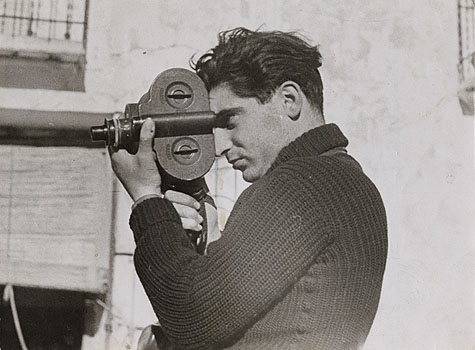
Gerta Pohorylle and André Friedmann and are young Jewish refugees who arrive in Paris in 1935. Caught up in the scene that is Paris on the cusp of World War II,  the two were first friends, then business partners and finally lovers. Friedmann taught Pohorylle the art of photography and she, in turn, remade him into Robert Capa, launching his career, and remade herself into Gerda Taro. She became one of the first female combat photographers and he became internationally known for his photograph, The Fallen Soldier. taken early during the Spanish Civil War.


Capa and Taro found themselves caught up in political movements in Paris as much because of what they stood against as because of what they stood for - they were both fiercely opposed to Facism. When the Spanish Civil War broke out, it was only logical that the pair would find themselves drawn to the country, throwing themselves as close to danger as was possible.


 In her author notes, Fortes who is Spanish, stated that she's been drawn to the work of Capa for years. It was in 2008, when 127 undeveloped rolls of film that Capa, Taro, and their friend David Seymour had taken during the war, that Fortes decided it was time to write the story. Interestingly, I found the book to be much more Gerda's story.

Waiting For Robert Capa struggles to find it's voice. Sometimes, it's almost overly poetic as Fortes writes about the environment of Paris. Other times it reads much more as if it were a work of non-fiction, detailing movements in battles and dropping names of other well-known participants in the Paris and/or Spanish settings. For me, I far preferred when Fortes cut back on the descriptiveness and got to the meat of the story. It's a story I've been interested in for a couple of years and it felt as if Fortes and written fully-developed characters who may very well be much like the people on which they are based. I find myself even more interested in this pair whose relationship seems as if it truly were one with origins in the pages of a novel.

Thanks to TLC Book Tours for giving me the opportunity to read this one. For more opinions, please see the full list of reviews.

Monday, September 19, 2011

me again by Keith Cronin

me again by Keith Cronin
322 pages
Published August 2011 by Gale Cengage Learning
Source: the publisher and TLC Book Tours

"I was born on a Tuesday morning. It was a difficult birth, because I was thirty-four years old."

Six years after slipping into a coma following a stroke, Jonathon Hooper miraculously wakes up. His body is atrophied and he can't remember much of anything or anyone from his past. Not the girlfriend who breaks up with him the first time she visits him, not the brother who seems to take a little too much pleasure in watching Jonathon suffer, not the parents who are so eager to have him remember his past. Not wanting to hurt anyone, though, Jonathon immediately decides it's best to let them think that even though he can't remember his previous life, he can remember them.

The only person who really seems to understand what Jonathon goes through in the next few months is Rebecca, a beautiful young woman who has also suffered a stroke and goes through rehabilitation in the same facility Jonathon starts out in. Neither Rebecca or Jonathon is the person they were before their strokes. In Jonathon's case, this soon proves to be a good thing; he was not a good person. But for Rebecca, it means that she is no longer than wife she once was, which puts a tremendous strain on her marriage.

Jonathon's mother works very hard to bring his memory back, pulling out photo album after photo album and having people his life stop by to visit. All of this seems to be moot until one afternoon Jonathon rounds a corner in the house to find the first familiar face he has seen. Once the door to memories has opened, it is only a matter of time before some of Jonathon's past comes back to him.

I can't recall my immediate thoughts when presented me again for review, but I'm quite sure that curiosity was the deciding factor in me agreeing to review this book because the words "stroke," "coma," and "humor" all appeared in the email. I had to see how Cronin could possibly make a book about stroke recovery humorous. Once again, an author has proved to me that a serious subject can be handled in a light way without making light of the subject. As soon as the staff in the hospital which has been housing Jonathon becomes aware he has awakened:

"Other voices joined in, overlapping each other in conversation, and the name Jesus came up repeatedly.

I formed my first conscious thought: I must be Jesus."
 Ah, irreverence. This book and I are going to get along. Because, seriously, what would you think if you were Jonathon in this situation? And so the story goes; Cronin writes in a way that assured me that he knew what he was talking about when he described the experience of waking up from a coma, recovering from a stroke, and dealing with the aftermath of what the stroke has done. But doing it all with a sense of humor and irony.
" "Did you like that sherbet?"
"No, not particularly."
"Me neither." She leaned forward, her voice growing more insistent. "Now imagine everybody telling you that you used to just love orange sherbet. And that it's really important that you start loving it again."

"That's what my life is like right now. I don't like orange sherbet, but I used to. And now everybody want s me to like it again, and tells me that if I don't, I'm not the person I used to be. And not the kind of person they want to be with.""

There is a side story about that Cronin uses to demonstrate what a terrible person Jonathon used to be that Cronin uses in the end to solve a plot problem. This particular part of the book really didn't work for me. I did, however, think the way Cronin dealt with the relationship between Jonathon and his father was wonderfully real. Perhaps everything wrapped up a bit too neatly for my tastes but I liked the last line as much as I liked the first line.

Thanks to TLC Book Tours for including me on this tour. For other opinions, view the full tour schedule. To learn more about Keith Cronin, visit him online at his website, keithcronin.com, or on Facebook.

**Well, this is embarrassing! Even though I had the book right in front of me as I wrote this review, I repeatedly referred to the author as "Kevin" instead of "Keith." I blame a flashback to my years listening to REO Speedwagen. No wonder I couldn't find Cronin on Twitter!

Monday, September 12, 2011

Just My Type: a book about fonts by Simon Garfield

Just My Type: a book about fonts by Simon Garfield
356 pages
Published September 2011 by Penguin Group
Source: the publisher and TLC Book Tours

The front of Just My Type says that it is an international bestseller. Really? Don't get me wrong, I liked this book a lot. But I had no idea there were that many people that were interested in fonts. But then, until I read Just My Type, I had no idea that people actually had jobs creating fonts. Don't laugh. I know someone has to create them. It just never occurred to me that someone could actually make a living creating new fonts, let alone become well known (well, relatively speaking).

In Just My Type, Simon Garfield introduces readers to the creators of many of the most well known font creators, including both their personal and professional backgrounds. My favorite part of meeting these people was learning about their personal lives. Eric Gill, creator of Gill Sans? Kind of a creepy guy. John Baskerville, creator of the, oddly enough, Baskerville font? Before she married John, she was married to a man name Eaves who deserted her with five children. She was Baskerville's live-in housekeeper before she became so much more. But until Mr. Eaves died, she wasn't able to marry Baskerville. It was kind of a scandal at the time.

Garfield also gives the history of most fonts. The earliest fonts are over 500 years old but most of the fonts we use on a regular basis are no more than 100 years old, with many of them being under 50 years old. Of course, the advent of the personal computer and the development of word processors has really sparked a surge in the development of fonts.

How aware are you of fonts? I didn't really think I was, except when I'm choosing one for my own works. But after reading Just My Type I think you are more likely to be aware of the font if the wrong one has been used. You wouldn't want your physician to be using Comic Sans, for example, on his or her materials. It doesn't really say "I'm serious and you can trust  me." You are likely to notice a change in font whenever a product makes a design change. The next time you see that your favorite product has changed the packaging, see if you notice the change in font.

You probably need to be something of a word or print junkie to really love Just My Type, but using a bit of humor, plenty of personal stories, and examples readers can really relate to, Garfield has crafted a book that will appeal to a wide audience.

Thanks to TLC Book Tours for including me on this tour. For more opinions, visit the other sites on the tour.


Simon Garfield is the author of twelve acclaimed books of nonfiction. He lives in London and St. Ives, Cornwall, and currently has a soft spot for Requiem Fine Roman and HT Gelateria. For more information about Simon and his work, visit his website at www.simongarfield.com.  Connect with Simon on Twitter.

Friday, September 9, 2011

Wherever You Go by Joan Leegant

Wherever You Go by Joan Leegant
243 pages
Published July 2010 by Norton, W.W. & Company, Inc.
Source: the publisher and TLC Book Tours

An apology upfront to TLC Book Tours; this review was supposed to have been posted on Wednesday, September 7th. I've had limited access to a computer this week and did not get it done.

Three main characters, three story arcs, are the driving force of Joan Leegant's latest novel.

Yona Stern is a woman who had a falling out with her sister a decade ago. In an effort to try to make amends, Yona travels to Israel, out to one of the settlements where her sister, Dena, lives with her five children and militant husband. The Ben-Tzions are amongst the group of Israelis who believe that their country to should not concede any land to the Palestinians, a group which looks down at the U.S. and European efforts to try to make peace in the Middle East. The past decade has seen Yona punishing herself for her what she did to her sister and she is desperate to be able to stop.

Mark Greenglass is the son of two non-practicing Jews who has lost his way, once again. After a long period of abusing drugs with the woman he loved, years ago Greenglass found himself swept into a deep love of the Jewish faith. It saved him then, and he's been able to make quite a name for himself as a teacher and lecturer, but now he is having a crisis of faith. What is it that God has in mind of him? Will he be able to leave New York and go back to the life he has been living in Jerusalem?

Aaron Blinder is the son of a writer who has become famous for writing fictionalized accounts of Nazi Germany and the Holocaust. His mother died of cancer and Aaron and his father have found themselves unable to relate to one another every since. Now Aaron has traveled to Israel and connected an ultra-militant group of Israelis bent on driving the Palestinians out of the land they believe belongs to the Jews. As part of this group, Aaron hopes to be able to tell a new story about the Jews, one his father could never hope to be a part of.

Three characters, three story arcs. All will converge when Aaron makes his move to make a name for himself.

Leegant's writing is beautiful; the country of Israel came alive for me as I was reading the book. The subject matter was utterly new to me, not being of the Jewish faith and not being familiar with the extremist movement in Israel, and this both worked for and against the book as I read. I'm always eager to learn something new in my reading but sometimes I felt like only someone of the Jewish faith could truly relate to this story. There was a lot going on in this book, a lot of characters to keep track of, and some of the characters lost some of their appeal to me along the way. It felt a bit like they got watered down in all that was going on. So it was a bit of an effort to get through the book. But when Leegant brought all of the story lines together, the book pulled me in and I had to keep reading to see how politics might affect these characters lives in ways that I would never have thought possible. Might an innocent bystander really get caught up in a crime and be convicted of being a part of the plot?

Thanks to TLC Book Tours for including me on this tour and, once again, opening my eyes to a part of life of which I was woefully unaware!

Tuesday, August 23, 2011

Cocktail Hour Under The Tree of Forgetfulness by Alexandra Fuller

Cocktail Hour Under The Tree of Forgetfulness  by Alexandra Fuller
256 pages
Published August 2011 by Penguin Group
Source: the publisher & TLC Book Tours

How to summarize Cocktail Hour Under The Tree of Forgetfulness? It is, at it's heart, the story of Alexandra Fuller's mother, Nicola who was born on the Scottish Isle of Skye but spent nearly all of her life in Africa. She certainly is the central character around whom all others orbit and a woman who lived her life so that she would have a biography worth telling. But Africa itself is the star of this book as Fuller chronicles her family's lives through a period when the entire continent was changing profoundly.

In Cocktail Hour Under The Tree of Forgetfulness, Fuller has spent hours interviewing her parents, primarily on vacation in South Africa where they spend hours literally having cocktails under the Tree of Forgetfulness. Ironic, isn't it, that nothing is forgotten under that tree?

Nicola's childhood was both typically British (stiff upper lip, loyalty to blood, that kind of thing) and utterly unusual.
"I used to run away from our bungalow, which was on the edge of the estate, and go over to the main house and play in her [their landlord's] garden with my first best friend, Stephen Foster." Mum smiles at the memory. "Stephen and I used to take turns pushing each other on his tricycle. We wore matching romper suits. We had tea parties. We went everywhere together, hand in hand."
"Stephen was Zoe's son?" I guess.
Mum frowns. "No, no, no," she says. "Stephan wasn't her son. Stephan was her chimpanzee."
There is a small, appalled pause while I try - and fail - to imagine sending one of my toddlers off to play with a chimpanzee.
"Weren't your parents worried he would bite you?" I ask.
Mum give me a look as if I have just called Winnie the Pooh a pedophile, "Stephen? Bite me? Not at all, we were best friends. He was a very, very nice, very civilized chimpanzee. Anyway, my mother didn't worry about me too much. She knew I would always be all right because everywhere I went Topper came with me."
"And Topper was?"
"A dog my father rescued," Mum says."
That passage says so much about the way that Nicola was raised, the way that she raised her own children. No fenced yards or stranger danger for them and animals were, truly part of the family. Nicola and Fuller's father, Tim, met in Africa and only during a period of extreme poverty and sadness did they return to Britain. But there was something about the light of Africa, the air, the opportunity, that drew them back, even when it meant settling in Rhodesia at a time when that country had been cut off by Britain.
"We accepted the war as one of the prices that had to be paid for Our Freedom, although it was a funny sort of Freedom that didn't include being able to say what you wanted about the Rhodesian government or being able to write books that were critical of it. And for the majority of the country, Freedom did not include access to public restrooms, the sidewalks, the best schools and hospitals, decent farming land or the right to vote."
Do you know the line people mock about movies - "I laughed, I cried...?" That was this book for me. I read long passages of this book to my poor husband (why are those passages never as funny when you aren't actually reading the book?), laughing. Then there were places where my heart broke for the Fullers and other passages where I gasped in disbelief at the horrors of war. Fuller places her family squarely into the reality of Africa as native Africans begin fighting to take back their continent.
"War is Africa's perpetual ripe fruit. There is so much injustice to resolve, such desire for revenge in the blood of the people, such crippling corruption of power, such unseemly scramble for the natural resources. The wind of power shirts and there go the fruit again, tumbling toward the ground, each war more inventively terrible than the last."
I loved this book. Although it skipped around quite a bit and it could sometimes take a bit to settle yourself back into where you were at in time and how it related to what else you had read, I ultimately far preferred Fuller's style than if she had tried to tell the story of her family in a more linear way. I grew to understand, at least a bit, what it was about Africa, that drew Fuller's parents and grandparents back to the continent, even at great personal risk. And I fell in love with Nicola, a woman who, at first glance, would appear to be one of the most thoughtless mothers you've ever read about. Not cruel, really, just a product of her upbringing and life. But Fuller, herself, clearly loves her mother, a woman of whom she says "the broken, splendid, fierce mother I have."

Thanks to TLC Book Tours for including me on this tour! For other opinions about the book, check out the full tour for this book. To learn more about Fuller, check out her website, where you can also learn more about her first memoir, Don't Let's Go To The Dogs Tonight, a book Nicola forever after referred to as that Awful Book.

Tuesday, August 9, 2011

What Language Is by John McWhorter

What Language Is (And What It Isn't And What It Could Be) by John McWhorter
272 pages
Published August 2011 by Penguin Group
Source: the publisher and TLC Book Tours

In What Language Is, best-selling linguist John McWhorter explores languages throughout the world, explaining how they have evolved over time...or why they haven't, looking at languages spoken by only a few hundred people to the biggies, like Mandarin and English.

As an avid reader, language fascinates me, always has. As a high school student I took not one, but both levels of  "Greek and Latin Roots." Can you say word nerd? I loved them and still consider them to be two of the most useful classes I ever took. So I went into What Language Is expecting to be both educated and entertained. After all, the blurb on the front of the book says that Publisher's Weekly found the book "a rollicking tour of human language." Within twenty pages I knew that those folks at Publisher's Weekly are clearly even bigger word nerds than I am; clearly the kind of nerds that wear pocket protectors and have their pants belted so high that their socks are visible.

Rollicking this book is not. Boring is the word that first came to mind after just a few pages, in fact. How in the world will I ever finish this one to review it, I wondered. Fortunately it did pick up considerably and I found myself constantly amazed by what I was learning. McWhorter (a renowned linguist, mind you) even makes the case that we should stop being so uptight about allowing what we call "slang" to slip into our accepted language. After all, that's what's happened to language for thousands of years.

Language, he contends, develops orally. That's how a something like "a napron" over time became "an apron." That's one of the reasons that language changed more rapidly in the early years of man; without a written record of the "right" way, language is more likely to shift over time. For example, as people began anticipating the next sound in a word, over time their mouths simply began adjusting to prepare of the change, altering the first sound until that became the accepted way of saying something.
"Only when this sort of thing became possible [massive population shifts] was there any reason for a language to undergo the peculiar circumstance of being learned as much by adults as by children. Only then could there be languages like Modern English and Persian."
And how is it that some languages are more complicated than others? McWhorter contends that in places where there was an influx of foreigners, language became less and less complicated. Adults, he says, are unable to fully learn a new language and they will be learning it through hearing it, rather than reading it. They will learn the things that are absolutely necessarily to communicate and leave the subtleties and tricky bits behind. With a large enough influx of immigrants, soon the native children beginning learning their own language as much from hearing the "correct" way of speaking as from hearing the "new" way.

Here's a shocker for anyone who's ever taken an English class (and I'm hoping that is pretty much all of you!). English is not a complicated language. What? Doesn't McWhorter still, after all these years of studying language, still sometimes wonder whether or not he should be using "than" or "then?" It's true, compared to many of the other languages of the world, English really is much easier. Our nouns, for example, do not have gender. After you read even a few pages about some of the more complex languages of the world, you will wish you had been nicer to your high school English teacher.Clearly it was your own stupidity that made the class so difficult; that poor woman was teaching a relatively easy language, after all.

My dad is exceedingly fond of the English language but I'm not sure I'll be able to pass this book along to him because of one passage. Dad, I hate to tell you this, but McWhorter thinks that we should just get over the whole issue of "lie" versus "lay."

"Lie and lay "want" to just be words that mean the same thing. Call that unsystematic, but all languages have synonyms. Language is sloppy."

In What Language Is McWhorter teaches us that language is ingrown, dissheveled (the book's spelling, not mine), intricate, oral, and mixed. With more than enough examples to prove it (and I really do mean more than enough), McWhorter convinces his reader that all of the above are true. And that maybe we should be teaching foreign languages to our grades school students instead of our high school students when it is much too late for them to really learn the language.


Thanks to TLC Book Tours for including me on this tour. My brain is exhausted now. Can I please go "lay" down?

Wednesday, August 3, 2011

The Gap Year by Sarah Bird

The Gap Year by Sarah Bird
320 pages
Published July 2011 by Knopf Doubleday Publishing Group
Source: the publisher and TLC Book Tours

The gap year usually refers to that year that some students take between their senior year of high school and their first year of college. But in Sarah Bird's latest, the gap year refers, instead, to the year in the lives of Cam and Aubrey Lightsey when suddenly, without Cam having a clue as to why, a gap developed between the two.

Cam and Aubrey had always been close, right up until Aubrey's senior year of high school when she suddenly started keeping a lot of secrets from Cam. The attitude that most teens exhibit had only rarely reared it's ugly head and flat out disobedience was almost unheard of. Cam, a quasi-rebel resigned to living life in the suburbs, is so wrapped up in her job as a lactation specialist that she hasn't even noticed the changes in Aubrey that started even before that year.

Then Aubrey suddenly gets a friend request on Facebook from a man she hasn't seen in 16 years...her father. And she begins a relationship with the high school's star quarterback. Aubrey knows that her mother will not approve of her relationship with either man, particularly not with the man who left Cam when Aubrey was only an infant to join a kind of religious cult. And Aubrey is certainly right. Cam is mortified with Aubrey's relationship with Tyler Moldenhause, but not as much because of what sport he plays as because she blames him for taking Aubrey away from her. As for Aubrey's father, it's not until Aubrey disappears, two days before she's supposed to leave for college that Cam even realizes that Aubrey's been in contact with her father. Suddenly the two need to work together to find their daughter and it's then that Cam fully discovers that he knows a lot more about the person Aubrey is now than Cam does.

When I was offered this book for review, I jumped at the chance; the story hits so close to home. My daughter is heading into her final year of high school and we are probably as close as any mother and daughter I know. Yet I also know that teens are capable of living a life of which their parents are entirely unaware. To paraphrase "Jerry McGuire," Bird had me at hello.
"Although I am a slob and raised Aubrey with plenty of messiness, my worst enemy - Recent Studies - now tells me that I should have gone the extra step and provided actual squalor. Recent Studies says that the absolute best thing for building antibodies is close contact with livestock. If I'd only put a goat in the playpen with my baby, she probably wouldn't have asthma today."
Yes indeed, Cam is living a life filled with regrets and concerns as she prepares to send Aubrey off to college and it really resonated with me. I'm a person who still lives with the guilt of having cut my son's fingernail too short the day I brought him home from the hospital...twenty three years ago. While I can't say that I could relate to Cam on every level, I frequently found myself nodding my head in agreement with a comment or observation she made. And I've been around enough teens in recent years to find Aubrey to be an equally reliable and true voice for her generation. Am I worried, after reading this book, that I might not know my daughter as well as I think I do? Heck, yes. Which is an excellent gauge of how well Bird has captured the relationship between a mother and daughter.

Bird uses dual narrators, both Cam and Aubrey, but in a style I've not seen before. While Cam's chapters are set in the present, over the course of a few days, Aubrey's are set in the past, catching the reader up on what has happened in the past year from her perspective. It's a wonderful tool to keep the reader engaged and to emphasize the differences in perspective and highlight the lack of communication between the two. The book is filled with humor but grounded it's serious story line. It makes for a very satisfying read and one I'll definitely be passing along to other moms.

Thanks to TLC Book Tours for including me on this tour! For more reviews of The Gap Year, see the full list of tour stops and to learn more about Bird, visit her website.

Tuesday, July 26, 2011

Tobacco Wars by Paul Seesequasis

Tobacco Wars by Paul Seesequasis
113 pages
Published October 2010 by Quattro Books
Source: the publisher and TLC Book Tours

In Tobacco Wars, Paul Seesequasis gives the reader a modern retelling of the Native American story of creation  (here a Bear Woman is responsible for all creation) and a work of historical fiction featuring Pocahontas and the British playwright Ben Jonson. Sound like an unusual story? You haven't heard the half of it.

When I say "modern retelling," I'm talking about a retelling that pushes the boundaries so far that Seesequasis feels the need to suggest in his acknowledgments that he may have "gone to places that they [his family elders] would not consider proper." The rivers and oceans are created when Bear Woman urinates; the sun is a ball of her phlegm; islands are mounds of her feces. The creation of the animals? Let's just say that occurs as the result of something your parents didn't tell you about until they thought you were old enough to hear it. And Seesequasis is quite vivid in his descriptions. After the first few pages of the book, I told my husband I felt like I was reading bear porn. Which, perhaps, brings me to the point. Much of this happens in the first few pages. I'm left wondering if Seesequasis' intention was to immediately shock his readers. To appear so avante garde that if, in the end, you feel like you just didn't get his point, he can justify it by suggesting that you had tuned out early.

The Pocohantas parts of the story are, by and large, much less graphic. Seesequasis, as a Native American, gives a unique feel to one of the most famous Native American's journey from "the Americas" to the court of England and back again. I certainly got what felt like a very real impression of what life must have been like on the streets of England at that time, gritty and dirty. My problem with these parts of the book was not so much what Seesequasis included but, rather, what he left out. In the end, I felt like there should have been more to the story; so few pages encompassing so many years and events.

I made the mistake of reading a few reviews of this before I even started the book, something I very rarely do and I will admit to being somewhat prejudiced going into the book. In the end I feel like I did read the book with an open mind (once I got past the bear porn) and believe I understand the point Seesequasis was trying to make. I did appreciate the idea of a "mother" of creation watching as the beautiful world she has created become overgrown with people who have no appreciation for its wonders. By and large, I enjoyed the story of Pocahantas and came away with the impression that Seesequasis certainly has talent. Sadly, I can't say that the book worked for me as a whole. The graphic descriptions did little more than turn me off to the book and I'm not sure that the two stories ever came together enough to feel like anything more than two entirely different stories.


Thanks to TLC Book Tours for giving me the opportunity, once again, to push my own boundaries with this one! For other opinions about this book, check out the full tour.

Paul Seesequasis is a writer and a journalist. He was the founding editor of the award-winning Aboriginal Voices magazine, and the recipient of a MacLean-Hunter journalist award. His short stories and feature writings have been published in Canada and abroad. Tobacco Wars is his first novella.

Wednesday, July 20, 2011

Northwest Corner by John Burnham Schwartz

Northwest Corner by John Burnham Schwartz
304 pages
Published July 2011 by Random House Publishing House
Source: the publisher and TLC Book Tours

First, a confession: I have not finished this book. I completely forgot about my tour date for this one and only just started the book a couple of days ago. That being said, I will, very likely finish it later today because Schwartz has completely sucked me into the story.

A dozen years ago Dwight Arno, killed a young boy in a hit-and-run car accident. After a prison term, his life as a lawyer, husband and father was over and he escaped across the country to California where he became the manager of a sporting goods store, keeping his past hidden from everyone in his new life. As the blurb on the book says he has "started over without exactly moving on." What he has done and the hurt it caused everyone in his life is never far from his mind.

Then one evening Dwight returns home from work to find Sam, his 22-year-old estranged son, sitting in his living room. Sam has fled home after getting in a bar fight in which he hit a guy with a baseball bat. Granted, he was assaulted first. But Sam is horrified to realize just how good it felt to release all of that anger. Wanting to escape, Sam has fled to the last place anyone would think to look for him, the home of the father he hasn't seen in ten years.

As Dwight and Sam come to know each other again and face their own natures, they also impact the women in their lives: ex-wife, lovers, mother.

Told in alternating points of view between many of the characters in the book and in both first- (Dwight) and third-person (all of the other characters), this book moves along rapidly. As it did when I read his The Commoner, Schwartz's beautiful writing is making me want to slow down and savor the book while the story itself is compelling me forward.
"And so it goes; the duffel switching hand to hand, the mind clear but seeing backward, the angled sun anointing him like a troubled pilgrim who's journeyed to the far edge of the continent in search of a blessing that he doesn't believe in but can't stop looking for."

I can't wait to see where Schwartz will ultimately take these characters who have come to life with such great emotional depth.


Thanks to TLC Book Tours for including me on this tour!  I'm eager now to read Reservation Road, the book that precedes this one in which readers are introduced to Dwight Arno. Learn more about Schwartz on his website or check out his Facebook page.

Thursday, June 23, 2011

Joy for Beginners by Erica Bauermeister

Joy For Beginners by Erica Bauermeister
288 pages
Published June 2011 by Penguin Group
Source: the publisher and TLC Book Tours
*all quotes are from an uncorrected proof

Having survived breast cancer, Kate has no interest in risking death by going on the white water rafting trip her daughter is proposing. But at a celebratory dinner with six of her friends, Kate agrees to go on the trip, if each of the women agrees to a challenge of their own, a challenge that Kate will choose.

Caroline's son has just left for college when her husband leaves her for a younger woman leaving her wondering who she is if she is not a wife and a mother. Free-spirit Daria, is the youngest of the group, a potter who prides herself on being unpredictable.Wife and mother, Sara loves those roles but has recently started to wonder what happened to pre-marriage Sara.
"And she found herself wondering at what point in her life she had ceased to be Gulliver and had become the strings holding him to the ground."
Hadley, Sara's neighbor, is a young widow. In her grief, she purchased a house with a garden where the ivy has all but taken over everything else in the yard and cut off the house from the outside world. Kate challenges Hadley to clean up her garden, opening it back up to the world and uncovering all that is still there, buried beneath.
"When Sean died she understood for the first time how completely human beings were dependent upon a suspension of disbelief in order to simply move forward through their days. If that suspension faltered, if you truly understood, even if only for a moment, that human beings were made of bones and blood that broke and sprayed with the slightest provocation, and that provocation was everywhere--in street curbs and dangling tree limbs, bicycles and pencils--well you would fly for the first nest in a tree, run flat-out for the first burrow you saw."
Marion, the oldest of the group, is also the rock steady organizer. Where her sister, Daria, grew up pushing the limits, Marion was always the "good girl."
"There were moments in life, Marion thought, when you reached back, baton in hand, feeling the runner behind you. Felt the clasp of their fingers resonating through the wood, the release of your hand, which then flew forward, empty, into the space ahead of you."
Kate's best friend, Ava, whose mother died of cancer, is dealing with the guilt of not being with Kate during Kate's battle with cancer. How could she be? When her own mother was losing her own battle, Ava discovered that her hyper-sensitive sense of smell meant that she could tell when people were losing their battles.

And Kate? Kate who had looked death in the face and won? Kate is terrified of the raft trip, unable to grasp how she could possibly have allowed herself to be talked into willingly risking her life after working so hard to save it.

Joy For Beginners started slowly for me. I felt much the same way with this one as I did with The Four Ms. Bradwells: another story about a group of women; what can this one possibly offer that's new? First of all, Bauermeister has written the novel in a unique way that allows each character to take center stage as they tackle the challenge that Kate has assigned them. There is none of the "whole group together hashing out old grievances" that is so standard in novels about women. Instead, many of the characters don't even appear in the other character's chapters.

I suppose it should not have surprised me not to "click" with some of the ladies. If these were real people, it would stand to reason that there would be some that I wouldn't connect with. Still I began to be worried when I wasn't particularly drawn into Caroline's and then Daria's stories.In the same way, then it should not have taken me by surprise to have found myself so emotionally attached to other characters, some because I saw so much of myself in them. I found myself particularly drawn to Sara and Marion because I saw something of myself in them, but also to Hadley, who brought out the mother in me. Bauermeister really grabbed me with these two passages that seem to define so many women's lives:

"From the beginning, Sara had felt the pull toward procreation, toward Dan, as strong as the current of a river, deep and sensual, impossible to resist when she was ovulating. During the weeks when she was not fertile, she had felt like paper, thin and insubstantial, ready to blow away with the next wind."
"She had never felt the simple urgency of time more than in the past few years, as her ovaries creaked into silence and she had gone for months and then a year without the gush of blood or the deep purple sadness that came with it. She had understood that something was ceasing within her and, more important, would never start again. The cold reality of it had struck her, as if, perched on the crest of a roller coaster, the rest of the ride was suddenly irreversibly clear."
Perhaps it just took me until Sara's story to really understand where Bauermeister was going with the book, what she was trying to say. Once I did, I couldn't put the book down as I was drawn deeper into these women's lives. Bauermeister's writing is sublime and her messages universal: don't be afraid to lean on others, take a chance, discover your joy and embrace it. Highly recommended for book clubs.

Thanks to the ladies at TLC Book Tours for including me on this tour. For more reviews of this book, check out the full list of reviews on the tour. For more information on Ms. Bauermeister, check out her website or follow her on Facebook.

Thursday, June 9, 2011

Guest Review of "Nerd Do Well" by Simon Pegg

Nerd Do Well: A Small Boy's Journey To Becoming A Big Kid
by Simon Pegg
368 pages
Published June 2011 by Penguin Group
Source: the publisher and TLC Book Tours

Summary from the publisher:
The unique life story of one of the most talented and inventive comedians, star of Shaun of the Dead, Hot Fuzz, and Star Trek.
Zombies in North London, death cults in the West Country, the engineering deck of the Enterprise: actor, comedian, writer and self-proclaimed supergeek Simon Pegg has been ploughing some bizarre furrows in recent times. Having landed on the U.S. movie scene in the surprise cult hit Shaun of the Dead, his enduring appeal and rise to movie star with a dedicated following has been mercurial, meteoric, megatronic, but mostly just plain great.
From his childhood (and subsequently adult) obsession with science fiction, his enduring friendship with Nick Frost, and his forays into stand-up comedy which began with his regular Monday morning slot in front of his twelve-year-old classmates, Simon has always had a severe and dangerous case of the funnies.
Whether recounting his experience working as a lifeguard at the city pool, going to Comic-Con for the first time and confessing to Carrie Fisher that he used to kiss her picture every night before he went to sleep, or meeting and working with heroes that include Peter Jackson, Kevin Smith, and Quentin Tarantino, Pegg offers a hilarious look at the journey to becoming an international superstar, dotted with a cast of memorable characters, and you're rooting for him all the way.
When the lovely ladies at TLC Book Tours first approached me about the book, I immediately knew it was something that any of the males in my house would enjoy. My husband grabbed the book the minute it came in the mail, so he'll be your guest reviewer for this one!

Nerd Do Well by Simon Pegg pretty much sums it up as Simon is a Star Wars and Zombie movie junkie from way back. Having been a science fiction fan from way back as a wee lad of six or seven in Iowa sneaking up out of bed to join my much older brother and his friends, I can relate.  I loved the old Twilight Zone, Star Trek shows as well as Stephen King books, especially in his early days, so we have a similar mind set, although I didn't share the infatuation with zombies.  That being said I loved Simon's "Shaun of the Dead" and "Hot Fuzz," both excellent violent comedies that tickled my dark sense of humor.
One of the things I did not know was Simon's extensive experience in stand up comedy, comedy writing and working on some of the British shows that evidently were more of a hit over there or that I just plain missed here.  Something I will need to go search out.  Simon also has a great love for the dramatic arts and was exposed early and often in his family and I applaud him in his relentless pursuit of  his acting career knowing the ups and downs of the business.  

Being an autobiography it probably will appeal to a certain crowd and. as my lovely wife mentioned, more of a male crowd due to Simon's interests and style, but it was fun and interesting.  Despite his not rising to the pinnacle of the British education system with their various caste levels, Simon has a great command of the English language and a lively and witty writing style.  I can see why he has been doing television comedy writing as well as stand up. 

So if you are a bit is a Star Wars fan, like zombie movies, or are a fan of Simon's movies, this should be an enjoyable read.  I need to go out and see "Paul" that is still in the cheap theater and should be out on DVD soon. 

Thanks to TLC Book Tours for including me on this tour and to my husband for his review. I'm sure this book will be in one of my sons' hands soon! For more reviews of the book, check out the full tour. Follow Simon on Twitter at http://twitter.com/simonpegg.

Thursday, June 2, 2011

Thoughts Without Cigarettes by Oscar Hijuelos

Thoughts Without Cigarettes by Oscar Hijuelos
384 pages
Published June 2011 by Penguin Group
Source: the publisher and TLC Book Tours

Oscar Hijuelos has entranced readers with the characters in his books, mostly notably in his Pulitzer-prize winning effort The Mambo Kings Play Songs of Love (in 1992 it was made into a movie starring Armand Assante and Antonio Bandaras). In Thoughts Without Cigarettes, Hijuelos doesn't need to create great characters, he only needs to tell us about the ones he grew up with.

Born in New York City, Hijuelos is a second-generation Cuban-American, grew up in the 1950's in a neighborhood that was culturally diverse. When Oscar was only four, Magdalena Hijuelos took her two sons home to Cuba for an extended stay. While there, Oscar contracted a disease that resulted in nephritis and a year-long stay in a ward for similarly ill persons. As best he can recall, Oscar's father never visited him there. Although his mother did visit, she was not allowed to touch him and the more he was exposed to the English language during his stay, the less he understood of the Spanish that his mother spoke, creating a barrier between the two they were never able to overcame.

When he returned home, Oscar was smothered by his parents, particularly his mother. He was not allowed to play outside and was on a very restricted diet (in a home where rich foods where a part of the daily diet) for years after his release from the hospital. When he was finally allowed to go to school, he found himself playing catch up with the other students. Dealing with his alcoholic father, and suffering through his parents' high voltage marriage, made life at home difficult at best. All of which contributed to Oscar spending the rest of his life trying to discover his place in the world.


Interestingly, writing was not on Hijuelos' radar as he grew up; being a musician was first desire, but if that didn't work out, his plan was to be a teacher. Teachers along the way, however, recognized that Hiuelos had a gift and encouraged him to write. A chance encounter with the author William Burroughs (Naked Lunch) further convinced Hijuelos that writing might just be his thing.

Certainly Hijuelos lived an interesting life and paints a vivid portrait of New York City, his home life and his family.
"Inside the bowels of the subway he would go, with its dirty platforms and penny Chiclets and five-cent Hershey bar dispensers on the columns, and board his train downtown and eventually over to Grand Central, the seats in those days still often covered in lacquered cane."
Perhaps it was reading back-to-back non-fiction works (something I never do). Perhaps it was the feeling I couldn't shake that someone had shaken up Frank McCourt's Angela's Ashes and thrown in some Cuban spice. Perhaps it was the fact that early in the book, Hijuelos repeated guessed at what might have happened or what might have been said (obviously, he would have been too young or not directly involved in certain conversations to be able to say things with sureness). "Possibly" and "I can only suppose" only work for me, even in a memoir where exact details are not necessarily required, when the possibilities or suppositions have some basis in reality. For whatever reason, even though I enjoyed Thoughts Without Cigarettes, it didn't really flow for me, feeling more like something I had to read, rather than something I wanted to read. Which is a shame, because Hijuelos really is a marvelous writer.
"Yet, while he [Hijuelos' father] offered me affection, that cubano, a union man and hotel cook of simple tastes and longings, he never really taught me anything at all, not how to dress (though he could be quite dapper), not to dance the mambo or rumba (at which he, like my mother, had excelled), nor, among so many other things, even how to drive a car (he, raised on farms, which horses, never would learn). And when it came to something as important as restoring that which had been taken from me, a sense of just who I was, I doubt that, as with my mother, it hardly occurred to him that something inside of me was missing, an element of personality in need of repair. Earthly in his needs and desires, he just didn't think that way."


Thanks to TLC Book Tours for including me on this tour. For other opinions on this book, check out the other stops on the tour.